CMDB Data Integrity in Carrier Network Environments
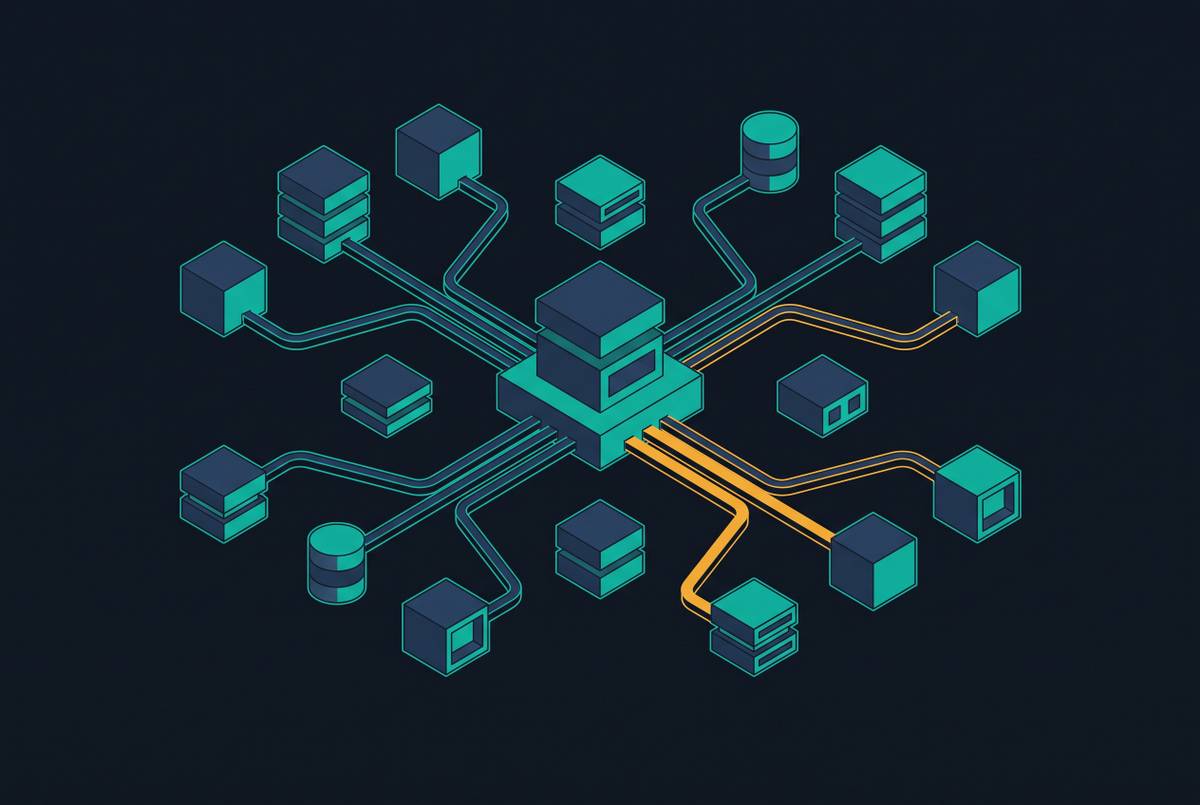
Fragmented systems force carriers to choose between operational risk and human escalation.
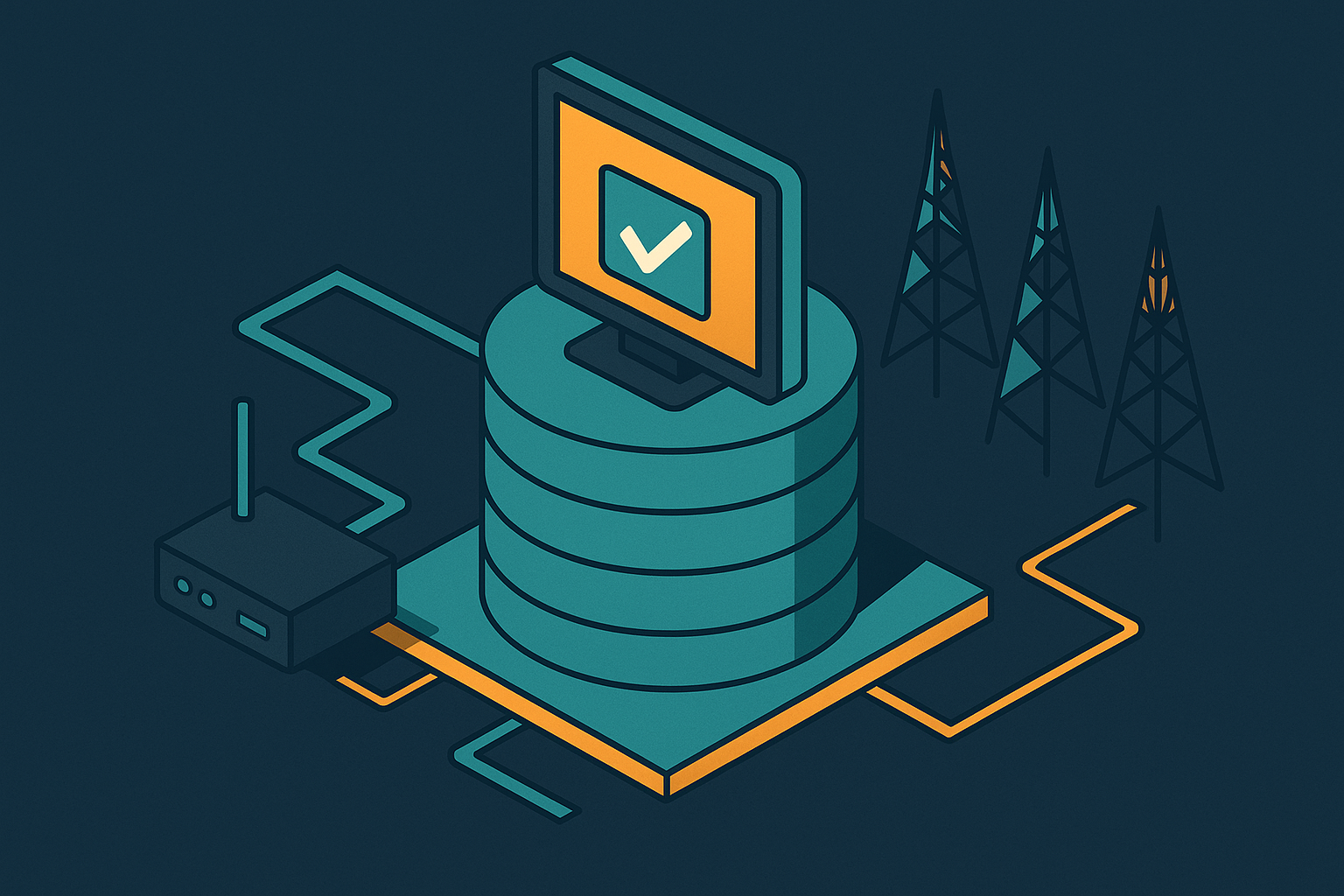
A carrier's CMDB does not fail because records go stale or because operators skip updates. It fails because network truth is split across systems that were never built to share a common schema, and no amount of data hygiene can repair a boundary problem. VLAN and service-layer records get maintained on a separate track entirely from PON topology, so the people responsible for the logical service have no reliable window into the physical path carrying it.
None of these are isolated glitches. The failure sits in the space between them, where no shared definition exists for what a splitter, a feeder, or a service actually is across the whole stack. That is a structural condition, not a discipline problem, and it will not respond to better change-management practice or more frequent audits.
Passive and active plant data fragmentation that standard CMDB thinking doesn't anticipate
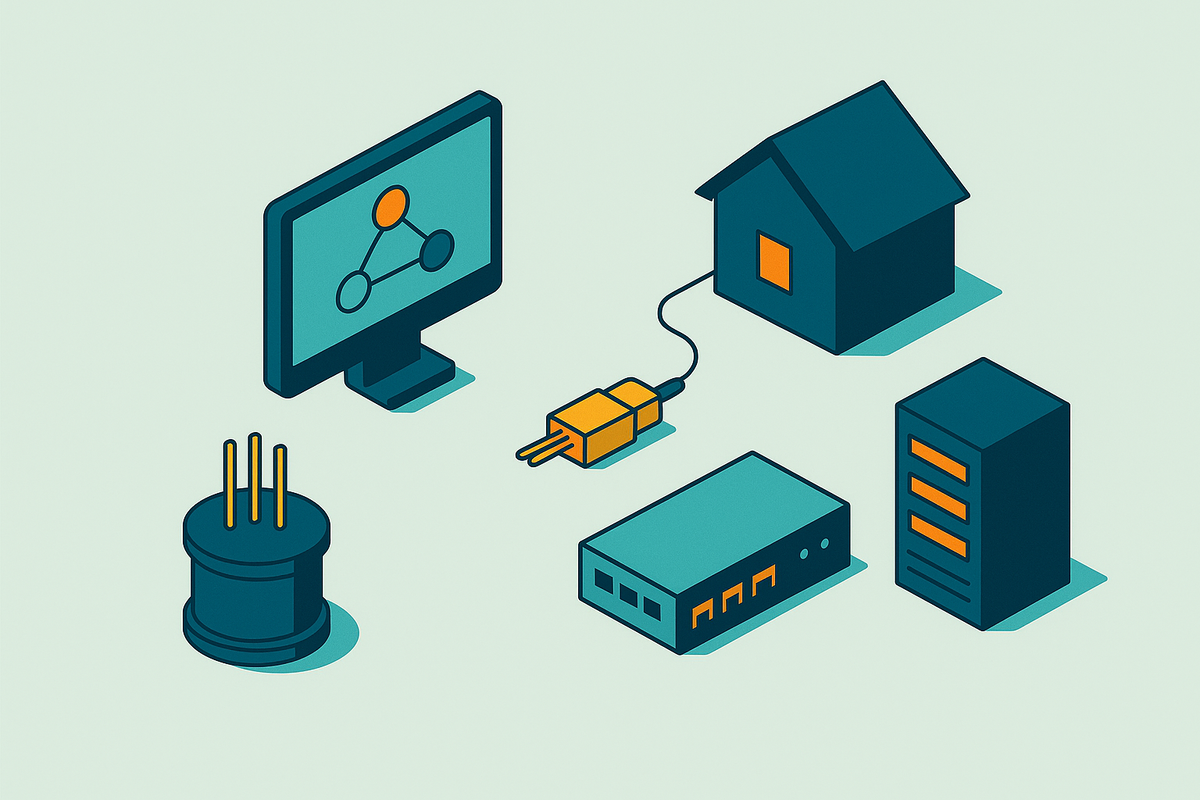
Fiber-to-the-home networks compound this condition by forcing carriers to manage two distinct physical realities at once: the passive plant and the active plant. The passive plant lives in geography and structure: duct depth, duct occupancy, splice points, and splitter mappings, the kind of precise spatial data that belongs naturally in a GIS tool but has to be operationally accessible to OSS the moment a technician needs it in the field. The active plant lives in configuration: slot, card, port, and service assignments on OLTs and ONTs, data that is native to NMS and provisioning systems and foreign to GIS.
Carriers rarely get to manage this split in isolation. Registering a single PON connection illustrates the scale of the problem on its own: it requires active network registration, passive network registration, physical network inventory registration, logical network inventory registration, registration of relationships to other networks, telephone number management, network auto discovery and reconciliation, and service fulfillment, with each of those steps typically recorded in a different system.
Multi-technology operators carry an even heavier version of this burden. Copper, coax, fixed wireless, and satellite plant each come with their own inventory system, so the same customer address or the same circuit can exist four separate times across four separate platforms, each with its own version of the truth. The consequence runs deeper than incomplete records sitting in a drawer somewhere. Service qualification, the very first step in the delivery chain, starts from a foundation of contradictory data, and any error introduced at qualification propagates through every workflow built on top of it: design, provisioning, activation, billing, assurance.
Where configuration truth decays fastest
Configuration data does not decay at a constant rate across a carrier's stack. It decays fastest at the seams, the points where data has to cross from one schema into another and be translated, mapped, or re-keyed to make that crossing. A relationship that exists clearly in the source system simply has no place to exist in the destination system, so it disappears from the record.
Timing makes the decay worse. Billing and CRM systems typically run on nightly batch cycles, while network alarms and topology data move through the OSS layer in seconds to minutes. The same subscriber or the same service can therefore carry a different state depending on which system answers the question and at what hour it's asked. This is not simply a lag problem that a faster sync job would fix. It produces what amounts to ontological fragmentation: conflicting internal definitions of core entities like "subscriber" or "service," where two systems can disagree about a record and both be correct according to their own internal logic. That kind of disagreement cannot be resolved by comparing timestamps, because the systems are not describing the same entity in the same terms to begin with.
Automated discovery tools help, but they do not close this gap on their own. Discovery captures state within the boundary of a single system; it was never built to reconcile across boundaries. The practical effect is a CMDB that is technically accurate and operationally useless at the same time: it correctly reports what each source system says, while remaining unable to answer the question that actually matters, which is the current end-to-end state of a given service and which system's account of that state deserves to be believed. When the systems disagree, someone, or something, has to decide which one is right. That decision point is where the real cost of fragmentation lands, and it is an architecture question before it is anything else.
What agentic AI exposes about CMDB fragmentation
For years, the gap between what each system says and what is actually true was bridged by human judgment. Experienced operators know which system to trust for which kind of question, and they carry the reconciliation work in their heads, often without realizing they're doing it. That tacit knowledge is precisely what agentic AI does not have and cannot improvise. Fragmentation that was tolerable when humans sat at every seam becomes a hard architectural blocker the moment an autonomous agent is asked to act without a human in the loop.
Every workflow handoff an agent has to cross is a seam where data needs reconciling before any action can safely be taken. An AI agent that cannot trust its CMDB is left with two options, and both are costly: it halts and escalates to a human, which erases the efficiency case for deploying it in the first place, or it acts anyway on stale or contradictory data, which introduces operational risk at machine speed rather than at the slower, more forgiving pace of a human workflow.
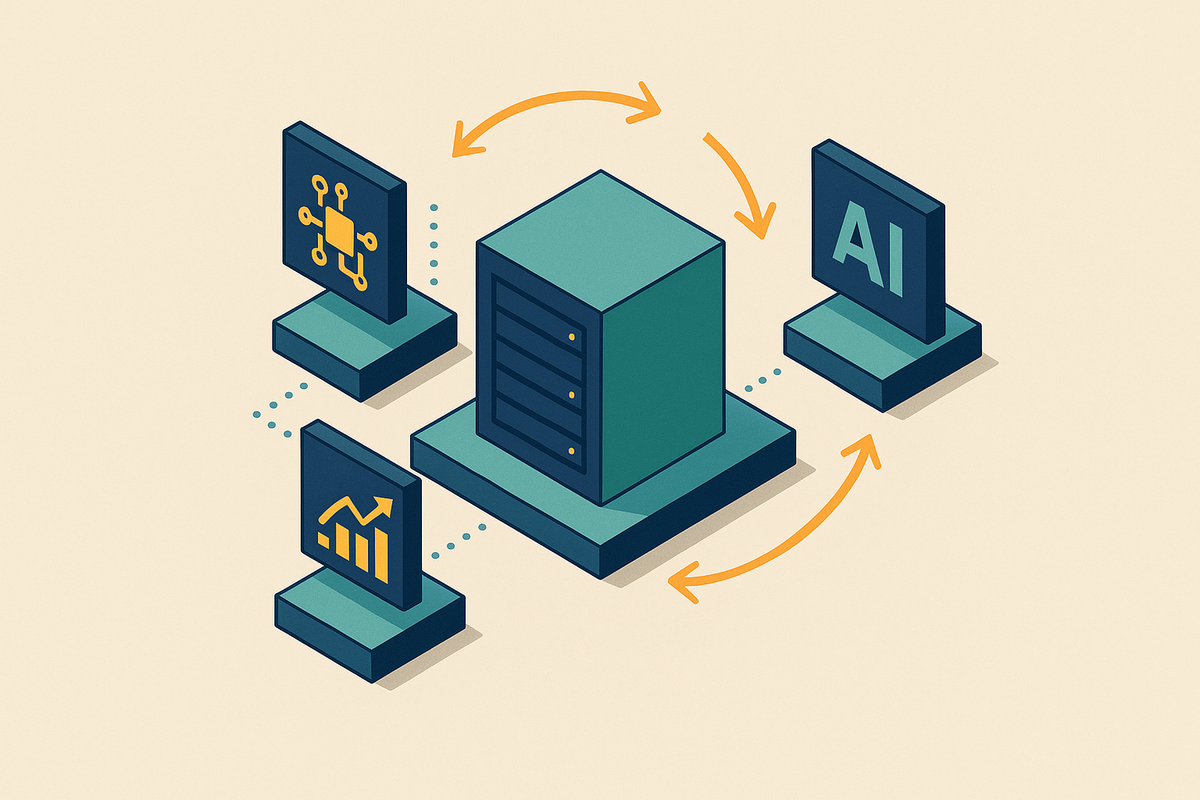
Moving agentic AI from an isolated pilot to real operational scale requires a structured, typed world model, often described as an ontology, that unifies data across what were previously fragmented systems. Absent that model, an agent is reasoning over a partial and internally inconsistent picture of the network, no matter how capable the underlying model is. This marks the real line between AI-augmented systems, where machine learning gets bolted onto a legacy OSS to add predictive features on top of the same fragmented data, and AI-native systems, where the data model itself is designed from the outset to support autonomous agent operation. Fragmentation was never the operators' failing. It was a cost the industry could absorb as long as a person stood at every seam to catch it. Agentic AI removes that person, and the cost becomes visible.
Legacy OSS architectures and unified data foundations
The instinct to solve this by adding another integration layer on top of the existing stack runs into a hard limit: legacy OSS platforms were designed for monolithic, on-premises environments built around voice and messaging services. Their schema, their update cadence, and their integration model were never built to represent the full service delivery lifecycle as one coherent record, and that limitation is architectural.
The batch-processing assumption baked into these platforms creates a structural ceiling on what they can deliver. A system designed around delayed data cycles cannot produce the real-time, consistent configuration state that service qualification, automated provisioning, and agentic AI all depend on, regardless of how much compute or how many APIs get layered on top of it afterward. Retrofitting AI onto a fragmented legacy stack reproduces, at every new integration point, the same costly handoffs where data must pass manually between disconnected systems: each connection between an AI layer and an underlying system becomes one more seam where data has to be translated, and the agent's reasoning is only ever as sound as the weakest translation anywhere in that chain.
The inventory migration challenge facing fiber operators makes this concrete. Managing physical and logical network inventory data for service fulfillment and assurance across an FTTx deployment calls for next-generation OSS capabilities that consolidate and centralize provisioning, inventory, and assurance functions in a way that existing platforms cannot be configured into. These are architectural additions, built on a different foundation, not settings changed on the platforms already in place.
Unified data models and configuration integrity across the service delivery lifecycle
A unified data model means establishing one authoritative schema covering qualification, design, provisioning, and activation, so that every system in the stack reads from and writes to the same definition of every configuration item and every relationship between them, without requiring every tool to move onto a single platform. Under that model, the CMDB stops functioning as a separate register that periodically gets synchronized with operational systems. It becomes the operational data layer itself, so configuration truth and operational state are the same record rather than two records that someone, or some process, has to keep in agreement.
The data abstraction layer that AI-native operations depend on, the layer responsible for ingesting and normalizing telemetry, alarms, ticket logs, CRM interactions, and network topology into one schema, only works if the underlying model spans the entire lifecycle. A model covering provisioning but not qualification, or activation but not design, still leaves seams where data has to be reconciled by hand or by a brittle integration script. For carrier environments specifically, that means the model has to span both the passive and the active plant together: GIS-sourced geographical and structural data and OSS-sourced slot, card, port, and service configurations need to exist as related records inside the same schema, not as parallel datasets in separate systems that happen to sync on a schedule.
Industry standards are already moving in this direction. The MEF's Lifecycle Service Orchestration API framework, in its ninth release as of February 2025, enables automated service delivery among enterprises, service providers, and cloud providers. Data normalization and reconciliation across multiple sources has long been recognized as necessary CMDB practice. In carrier environments, that normalization has to happen at the level of the model itself, not at the level of point-to-point integration, because integration-level normalization still leaves the seam problem intact at every handoff, no matter how well each individual connector is built.
Governed, auditable access to the unified model as an operational requirement
Building a unified model and leaving access to it ungoverned concentrates risk instead of resolving the integrity gaps described above. It concentrates risk instead. If automation and AI agents can write to the authoritative record without the same audit trail and permission structure that applies to a human operator, the model's single source of truth becomes a single point of failure. Every action an AI agent takes against the configuration record needs to be logged with its intent, its parameters, and its execution outcome. That logging matters for a concrete operational reason: the integrity of the configuration record depends on the ability to reconstruct what changed, when it changed, why it changed, and under whose authority, long after the action took place.
Governance and audit trails covering AI agents and automation that read from or act on the CMDB are becoming a selection criterion carriers evaluate on their own terms, a sign the industry now treats ungoverned AI writes as a distinct integrity threat. Regulatory movement reinforces a case that already stands on operational grounds. Singapore's Infocomm Media Development Authority launched the first governance framework specifically built for autonomous AI agents in January 2026, a direct acknowledgment that compliance frameworks built for an era of human review do not reach an agent chaining tool calls across provisioning, billing, and network systems on its own. US carriers carry a parallel obligation under CPNI rules that apply fully to automated access to subscriber configuration data, agent or no agent.
The workable model has AI agents and human operators operating inside the same governed, transparent system: the same APIs, the same audit logs, the same permission structures. Under that model, the accountability standard applied to a human provisioning action applies equally to an agent carrying out that same action. None of this limits what AI can do on the network. It is what makes AI action on the configuration record trustworthy enough to rely on operationally, because an agent working outside the governance framework produces changes that the next process in the chain cannot safely build on.
Operational steps toward a unified, governed configuration foundation
The path toward a trustworthy configuration record runs through a specific sequence, not a single purchase or a single migration project. Only after those two are in place does it make sense to build automation and AI capability on top of the foundation, rather than trying to bolt automation underneath a structure that still has seams running through it.
The most productive place to start is the seam producing the most consequential conflicts today, which for most carriers is the boundary between GIS and physical inventory on one side and OSS and logical inventory on the other. Resolving the passive-to-active plant reconciliation at that boundary removes the most common source of qualification errors before those errors have a chance to propagate downstream. A controlled pilot, scoped to one or two critical service types and their associated configuration items, is a more defensible way to validate a new data model than attempting to represent the entire infrastructure at once. A tightly scoped pilot tests the model under real operational load and leaves behind a clear record of what changed and why, which matters both for engineering confidence and for the audit trail governance requires.
Carriers evaluating their existing OSS platforms should apply one test above all others: not how old the platform is, but what its architecture can actually represent. Can it hold qualification, design, provisioning, and activation as related records inside a single schema, with one shared API surface and one common audit trail? Platforms that cannot represent that relationship, no matter how many integrations get layered on top, are not a foundation. They are one more system waiting at the next seam.