DIA SLA Monitoring and Enforcement at the OSS Layer
Real-time OSS correlation is the only way to enforce financial penalties tied to SLA breaches.

DIA SLAs are legally binding performance obligations with automatic financial penalties attached, not aspirational targets buried in a contract appendix. The OSS is the only system capable of knowing in real time whether those obligations are being met. Most carriers today operate as though it can't.
What DIA SLAs actually commit a carrier to enforce
The contractual structure matters more than most operational teams acknowledge. The MSA sets the legal and liability framework, the Service Order defines the circuit, and the SLA defines the operational performance obligations against which credits are calculated: uptime, latency, jitter, packet delivery, and mean time to repair. Each metric carries a discrete measurement methodology. Latency is round-trip between hub routers averaged over the calendar month. Packet delivery is the successful delivery percentage between hub routers over the same period. These are not vague commitments. They are calculable numbers with financial consequences attached.
Service Disruptions are tiered, and the tiering determines whether credits apply at all. First Tier is total loss of service, Second Tier is substantial impairment, and Third Tier is limited impairment. Credits apply only at First Tier and for objective failures on latency, jitter, and packet delivery. The operational implication is significant: a carrier's OSS must distinguish between disruption tiers in real time, not after the fact, because the financial exposure depends entirely on that classification.
The credit mechanics place an even sharper demand on OSS timestamp accuracy. Credits are calculated per location and capped at a percentage of MRC for the disrupted service. They are not triggered automatically by the carrier. They require a Trouble Ticket submitted by the customer. So the carrier's OSS must track the same timeline the customer's team is watching. The credit clock starts on the later of two events: the customer's proper Trouble Ticket submission, or the customer granting access to the affected equipment. Timestamp accuracy in the OSS is therefore not a housekeeping concern. It is a financial one.
The Chronic Outage definition exposes the deepest gap between contractual language and operational visibility. The BCN Telecom DIA SLA, effective November 25, 2025, defines a Chronic Outage as three or more separate service disruptions in violation of an SLA Objective in a calendar month at the same location, each lasting more than twelve consecutive hours or more than forty-eight cumulative hours. That threshold is invisible without cross-incident correlation. No single ticket reveals it. No individual alarm triggers it. Only a system that correlates incidents across time, location, and severity can surface the pattern before it becomes a breach.
Enterprise telecom agreement best practices compound this exposure. Carriers design the contract hierarchy so that service credits are the sole and exclusive remedy for performance failures. Sophisticated enterprise customers, however, negotiate language into the MSA so that cumulative SLA failures across three or more consecutive months constitute a material breach triggering termination rights. So chronic near-misses, incidents resolved just inside the window, carry contract-level risk that only cross-month OSS correlation can surface. A carrier can lose the entire account without ever missing a single individual SLA threshold, simply because no system connected the dots across months.
Why the OSS cannot enforce what it cannot correlate in real time
The fundamental problem with traditional SLA monitoring is not that it is slow. It is that the data needed to evaluate SLA compliance is split across systems that do not communicate. The OSS can only see a breach after it has already been recorded by the customer's team, at which point the financial damage is already done and the timeline dispute has already begun.
The typical NOC environment illustrates the structural failure precisely. SLA obligations live in contract documents or CRM records. Ticket systems track incidents independently. Billing platforms calculate credits after the fact. None of these systems share state in real time. An engineer working a high-priority ticket may not know it is attached to a customer whose SLA window closes in minutes, not because the information does not exist, but because no system surfaces it at the point of decision. The correlation gap is not a lack of data. It is a lack of data in the same place at the same time.
The Chronic Outage threshold makes this concrete. That definition requires cross-incident, same-location, calendar-month correlation. Spreadsheet-based tracking and siloed ticket systems structurally cannot produce it. A pattern of near-misses, several incidents within a short period each resolved just within the window, never registers as a risk signal because no system is correlating across the incident dataset and across time. Reactive monitoring, responding to breaches after they happen rather than detecting risk before the window closes, is the default posture, and it is no longer commercially viable as enterprise contracts grow more demanding.
The indirect costs compound the direct ones. Support escalation overload diverts NOC resources away from actual remediation. Account managers spend hours reconstructing incident timelines instead of managing relationships. Compliance reporting becomes a manual investigation rather than an automated output. One missed SLA is a billing event. A pattern of missed SLAs is a churn event. The difference between the two is operational visibility, and most carriers do not have it.
What event-driven OSS architecture makes possible that legacy systems cannot
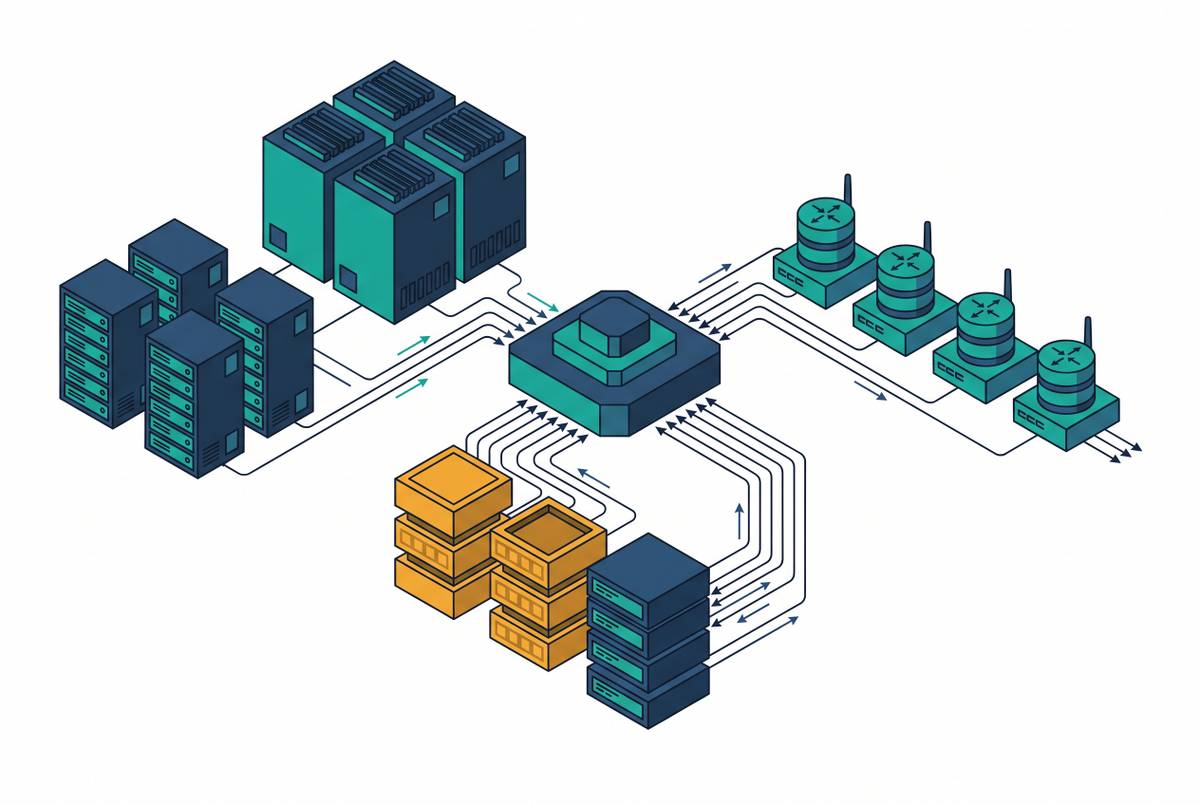
The architectural pattern that closes the correlation gap is event-stream processing that ties telemetry directly to specific customer service instances and SLA obligations. This transforms the OSS from a passive record-keeper into an active enforcement layer. The mechanism is worth understanding in operational detail, because it is what makes real-time enforcement a technical reality rather than a marketing claim.
The ISG Provider Lens Telecom Solutions Global 2025 report describes the emerging standard workflow. A Kafka topic receives latency metrics showing degradation. A stream processor correlates those metrics with specific customer service instances. A prediction model forecasts an outage. The OSS triggers auto-remediation, such as a traffic reroute. The BSS receives an event to pause billing for affected customers. The CRM system proactively notifies customers of maintenance. This is not a future state. ISG identifies event-driven APIs, telemetry, SLA monitoring, and multicloud/edge operations as table stakes for modern OSS/BSS/CX platforms.
The event bus in this architecture becomes the source of truth for everything happening in the operation. Legacy applications can continue to operate, but they publish and consume state changes through a shared, standardized event stream that is also accessible to AI agents. This is how the Chronic Outage definition becomes enforceable. Each disruption event at each location is a timestamped, addressable fact in the stream. A pattern-detection process runs continuously against that stream rather than waiting for a weekly spreadsheet review. The correlation that was structurally impossible in a siloed environment becomes a continuous background process.
Differentiation among OSS/BSS platforms is now visible via GenAI autonomy, unified inventory, converged charging, and outcome-based delivery models. But the event-driven architecture is the prerequisite that makes any of these capabilities real. Zero-touch service assurance is identified as a major opportunity. It requires the telemetry and correlation layer to already be in place. Architecture precedes autonomy, not the other way around.
Why AI operating without the same governance structures as human operators is a liability in SLA enforcement
The risk with AI in SLA enforcement is not that it acts too slowly. It is that AI acting without audit trails, access controls, and explainability creates a new class of enforcement failure: remediation actions that cannot be reviewed, explained to a customer, or produced in a dispute. Autonomy without accountability is not an upgrade. In a contractual context where every action may need to be defended, it is a liability.
The emerging governance model couples closed-loop automation with immutable audit trails. Every action triggered by an agentic AI is logged with its intent, parameters, and execution outcome. Those logs are forwarded to a governance subsystem so that each network operation performed by an autonomous agent remains auditable. Access control, observability, and explainability must be embedded in the agentic layer, not added afterward as an afterthought. Explainable AI methods such as feature-importance analysis identify which operational variables most affected a prediction. In SLA enforcement workflows, this translates raw network metrics into explicit, reviewable contributors to a remediation decision. The operator can point to exactly why a reroute was triggered, which variables drove the prediction, and what the expected outcome was.
A key emerging risk deserves emphasis. If the only explainability sits inside one vendor's closed system, the operator does not own the autonomy. They cannot produce a per-decision explanation in a customer dispute or regulatory audit without that vendor's cooperation. Guardrails, approval gates, and decision logs must be exportable and operator-controlled. The regulatory horizon reinforces this requirement. EU AI Act obligations on high-risk AI will reach safety-critical network functions. Operators will be required to maintain audit-ready logs and system-level transparency, with a right to explanation applying only to decisions with legal or similarly significant effects on natural persons. Governance architecture is therefore a compliance requirement, not just an operational preference.
The correct framing is not AI versus human operators. It is AI and human operators working within the same governed, transparent system, held to the same accountability standards, operating on the same audit trail. This is what makes autonomous remediation defensible. Not that AI made the right call, but that the call can be reviewed, traced, and explained by the operator who is ultimately accountable to the enterprise customer.
Why a unified data model is the structural prerequisite for both enforcement and governance
Fragmented data models do not just slow down SLA enforcement. They make it structurally impossible to know, at any given moment, whether a specific customer's service on a specific circuit is within or outside its contractual performance envelope. The correlation gap described earlier is not a tooling problem that better dashboards can solve. It is a data-model problem.
ISG describes the modernization direction as moving from legacy transactional functions to an automation-driven, standards-based ecosystem unified by strong architecture, real-time data, and cross-functional collaboration. The unified data model is what "unified by strong architecture" means operationally. When qualification, design, provisioning, and activation share one data model, a change at any stage is immediately visible at every downstream stage with no reconciliation lag. The service context that an engineer needs to prioritize a ticket, which customer, which circuit, which SLA obligations, what the current performance envelope is, becomes a single query rather than a cross-system investigation. The telemetry stream can be correlated against actual provisioned service parameters rather than against a generic circuit record.
The governance argument depends on the same foundation. AI agents operating in the event stream need access to the same complete, authoritative service context as human operators. That is what makes their decisions auditable and their audit trails meaningful. An audit log without service context is a timestamp with no story attached.
SLA management research identifies lack of transparency on actual service performance, multi-tenancy heterogeneity, and scalability as the persistent challenges in SLA lifecycle management. All of these are data-model problems before they are tooling problems. The emerging frontier follows the same logic. Machine-readable SLA clauses converted into verifiable predicates, monitored within Trusted Execution Environments with tree-organized telemetry and cryptographic attestation, represent a path toward trustless SLA data integrity. This is possible only when the underlying data model is coherent enough to define what "compliant" means as a verifiable predicate. The data model is the foundation on which both enforcement and governance stand. Without it, neither is real.
What distinguishes an OSS built for SLA enforcement from one retrofitted to support it
The distinction between an AI-native OSS and an AI-augmented one is architectural, not cosmetic. For DIA SLA enforcement, that distinction has direct operational consequences. A platform either has the structural properties that make continuous enforcement possible, or it does not. Retrofit workarounds cannot close that gap.
ISG identifies the evaluation criteria for integrated OSS/BSS/CX platforms: modular, API-first, cloud-native architecture. Adherence to TM Forum ODA/Open APIs, intent-driven orchestration, closed-loop assurance, and GenAI-enabled catalogs are also criteria. These are not feature checkboxes. They are architectural properties that either exist or do not. A platform that meets these criteria can enforce SLAs continuously. One that does not can only report on them retroactively.
What to look for in an enforcement-capable OSS begins with telemetry correlation tied to specific customer service instances, not just network-level metrics. SLA obligation state, including remaining time in a response window, cumulative disruption hours at a location in the current month, and proximity to Chronic Outage thresholds, must be visible at the point of incident triage, not retrievable only by a billing analyst after the fact. AI agents must operate on the same APIs, permission structures, and audit logs as human operators, so that autonomous remediation actions are held to the same accountability standard as human ones. Audit trails for every automated decision must be exportable and operator-controlled, not locked inside a vendor's interface. A single data model must span qualification through activation, so that service context is authoritative and not reconstructed per-incident from multiple systems.
What to be skeptical of is equally specific. AI monitoring described as a module, add-on, or integration signals that the underlying model is still fragmented. SLA reporting that produces dashboards without also producing actionable alerts at the right time with the right service context is decorative, not operational. Governance described as a future roadmap item rather than a current architectural property is a warning sign. Legacy OSS platforms were not designed for AI and cannot be retrofitted to meet the correlation, context, and governance requirements that real-time DIA SLA enforcement demands. The architecture is the enforcement mechanism. Everything else is reporting.