Dedicated Internet vs Carrier Ethernet OSS Requirements Are Not the Same
DIA and Carrier Ethernet need completely different OSS qualification and provisioning workflows.
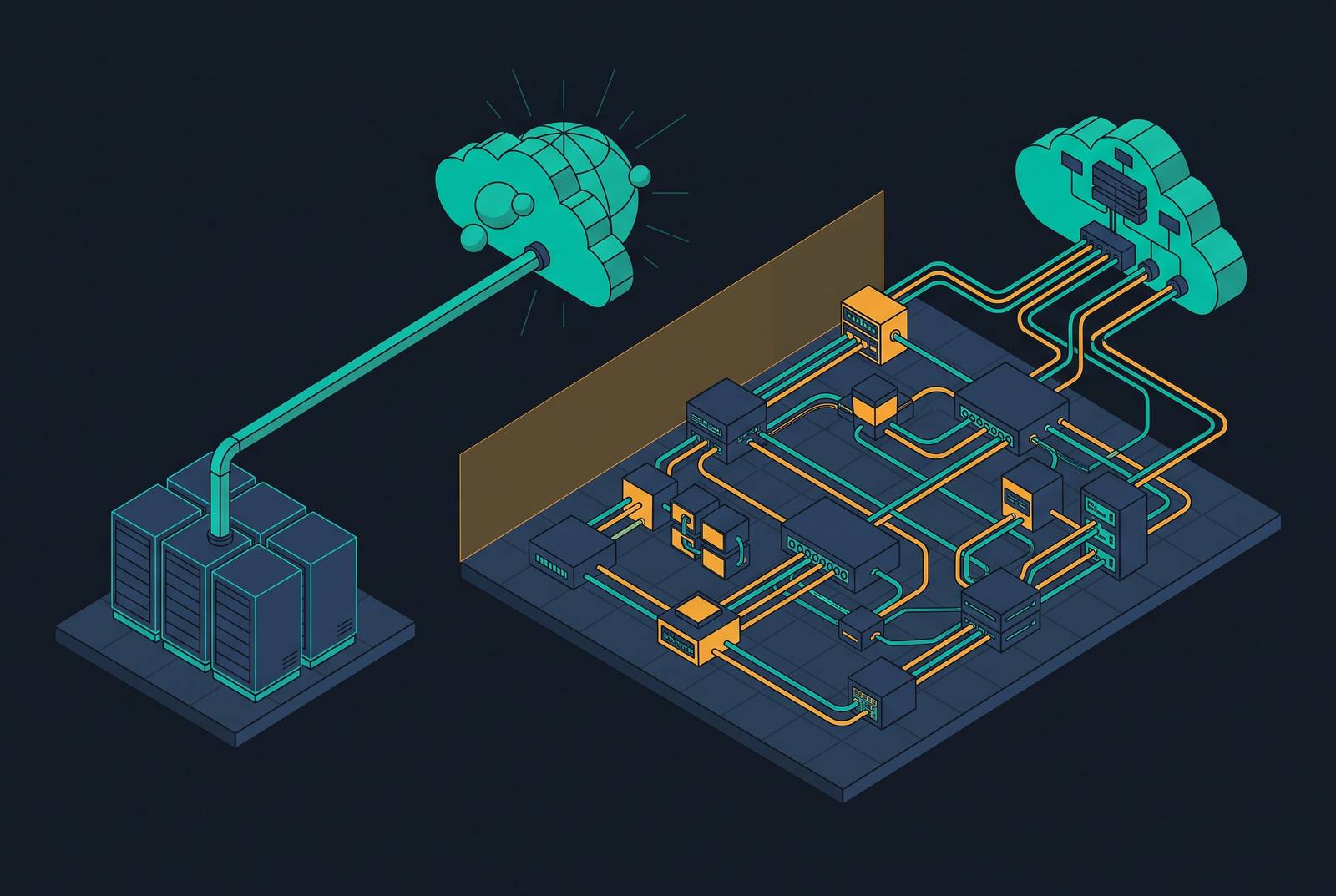
DIA and Carrier Ethernet are structurally different services. One is IP-centric access to the public internet, and the other is a private Layer 2 circuit between defined endpoints, and conflating them as "Ethernet services" misrepresents what each actually does operationally.
Why DIA and Carrier Ethernet are architecturally different services, not bandwidth variants
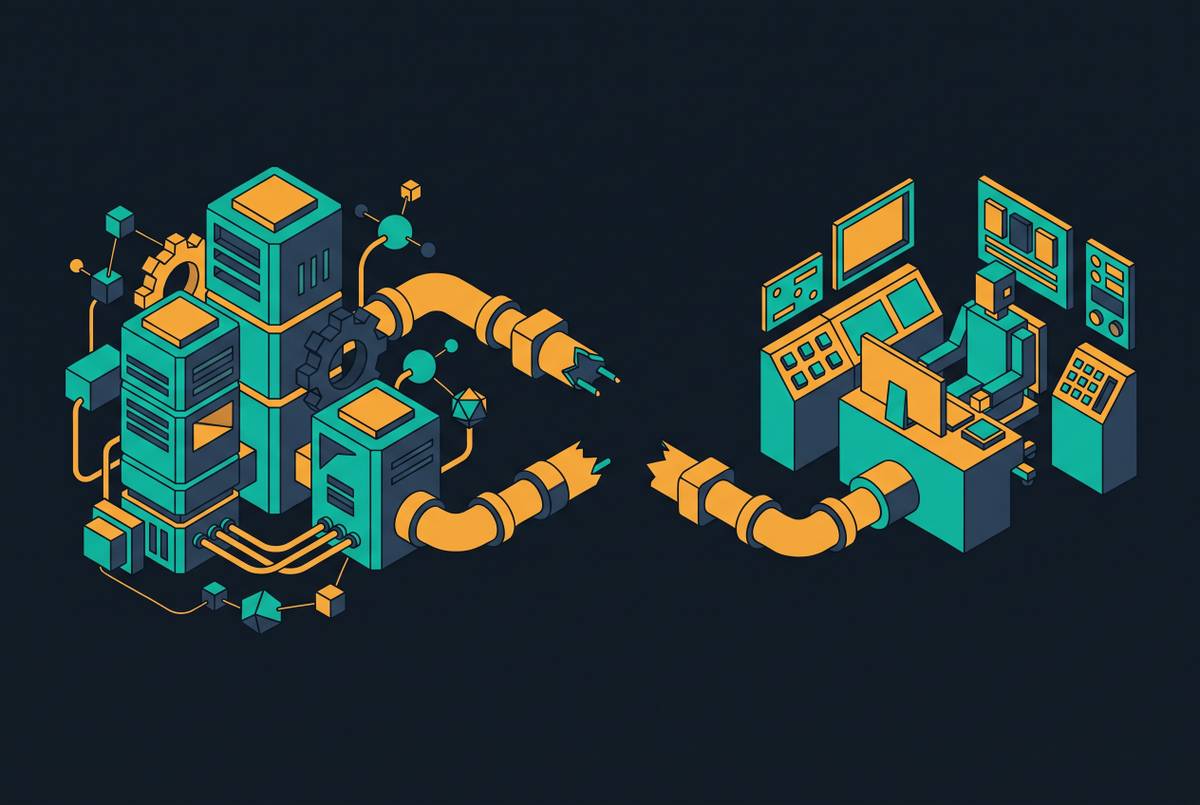
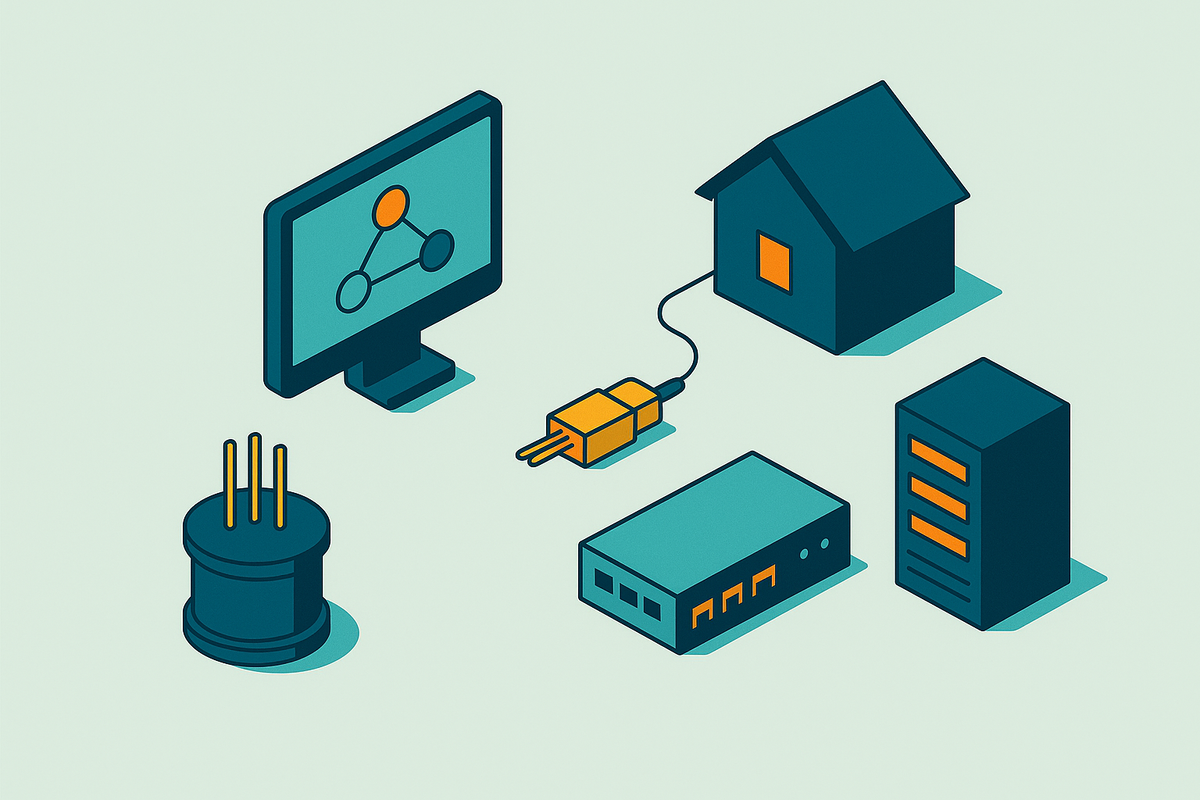
Start with what each service actually is, not what it's called. Carrier Ethernet works the opposite way, as a private Layer 2 circuit between defined endpoints rather than IP-centric access to the public internet. It's private Layer 2 connectivity that stays within the provider's managed network unless an internet connection is explicitly added, and it is governed by MEF standards, including UNI/EVC definitions and CoS policies. Calling both of these "Ethernet services" flattens a distinction that should never be flattened, because one service hands traffic off to the open internet and the other keeps it fenced in on purpose.
Configured as a point-to-point Ethernet Virtual Connection (EVC) between two UNIs, E-Line can also be set up as EVPL for point-to-multipoint scenarios. E-LAN gives any-to-any multipoint connectivity, essentially the carrier-grade version of VPLS. E-Access covers network-to-network interface connectivity, the handoff plumbing used for inter-carrier arrangements or last-mile scenarios.
What makes the confusion so persistent is that both services often show up with the same commercial packaging. Both offer dedicated, symmetric bandwidth, and that surface-level similarity leads operators and tooling vendors to underestimate the operational gap: the qualification and provisioning workflows beneath it differ fundamentally in structure. Add to that the fact that the bandwidth ranges of DIA and managed Business Ethernet services overlap substantially, reinforcing the superficial "same service" perception. But despite the overlapping bandwidth ranges reinforcing that superficial "same service" perception, they aren't. Carrier Ethernet's private-network design makes it inherently more secure between sites, but that security is bought with a more complex provisioning surface, and that trade-off is precisely what an OSS has to track correctly if it wants to avoid downstream chaos. DIA provides dedicated, symmetric bandwidth with guaranteed SLAs for uptime, latency, jitter, and packet loss, with the connection terminating at the public internet as traffic leaves the provider's network. MEF standards define service type taxonomy, as Neos Networks (2025) describes.
What each service requires at the qualification stage
Qualification is where theory turns into a checklist, and it's the first place a shared, undifferentiated data model breaks under its own weight. DIA qualification and Carrier Ethernet qualification are two distinct questions, each run against different network records. They're different questions altogether, run against different network records.
DIA and Carrier Ethernet are structurally different services: one is IP-centric access to the public internet, the other is a private Layer 2 circuit between defined endpoints. It's asking whether a circuit can exist.
These aren't variations on a shared query. They interrogate completely different data entities: IP inventory records on one side, circuit segment records and EVC identifiers on the other. A CoS availability check must confirm whether the required Class of Service tiers are available end-to-end on that path. Inter-carrier interconnect feasibility for E-Access scenarios must address whether an NNI exists or needs to be established with the far-end carrier.
An OSS that tries to run both service types through one qualification schema, lacking a proper service-type-aware abstraction layer, ends up doing one of two things wrong. Either it omits fields the qualification actually needs, or it populates fields that have nothing to do with the service being qualified. Both outcomes generate design errors, and those errors don't stay contained at qualification. They travel downstream into provisioning and activation, where they're far more expensive to catch and fix. Upstream internet routing readiness must be assessed through BGP peer availability and handoff capacity. EVC path feasibility must be determined by asking whether a viable circuit path can be constructed between the named UNIs.
Why the divergence in provisioning data models causes failures
Provisioning is where the incompatibility costs operators real time and real money, because it is no longer theoretical. DIA and Carrier Ethernet provisioning workflows are incompatible at the data model level, full stop, and forcing them through a shared schema without service-type-aware abstraction is a root cause of both provisioning failures and billing errors.
DIA provisioning runs on IP logic. DIA provisioning is IP-centric: it needs upstream internet routing records and BGP configuration.
Carrier Ethernet provisioning runs on circuit logic instead. Carrier Ethernet provisioning is Layer 2 circuit-centric: it needs a circuit segment record for every hop along the EVC path, CoS policy mapping enforced end to end and recorded per EVC, and MEF-compliant service activation steps, none of which maps cleanly onto a DIA provisioning workflow. Where E-Access is involved, inter-carrier NNI records and handoff agreements need to be tracked on top of all that.
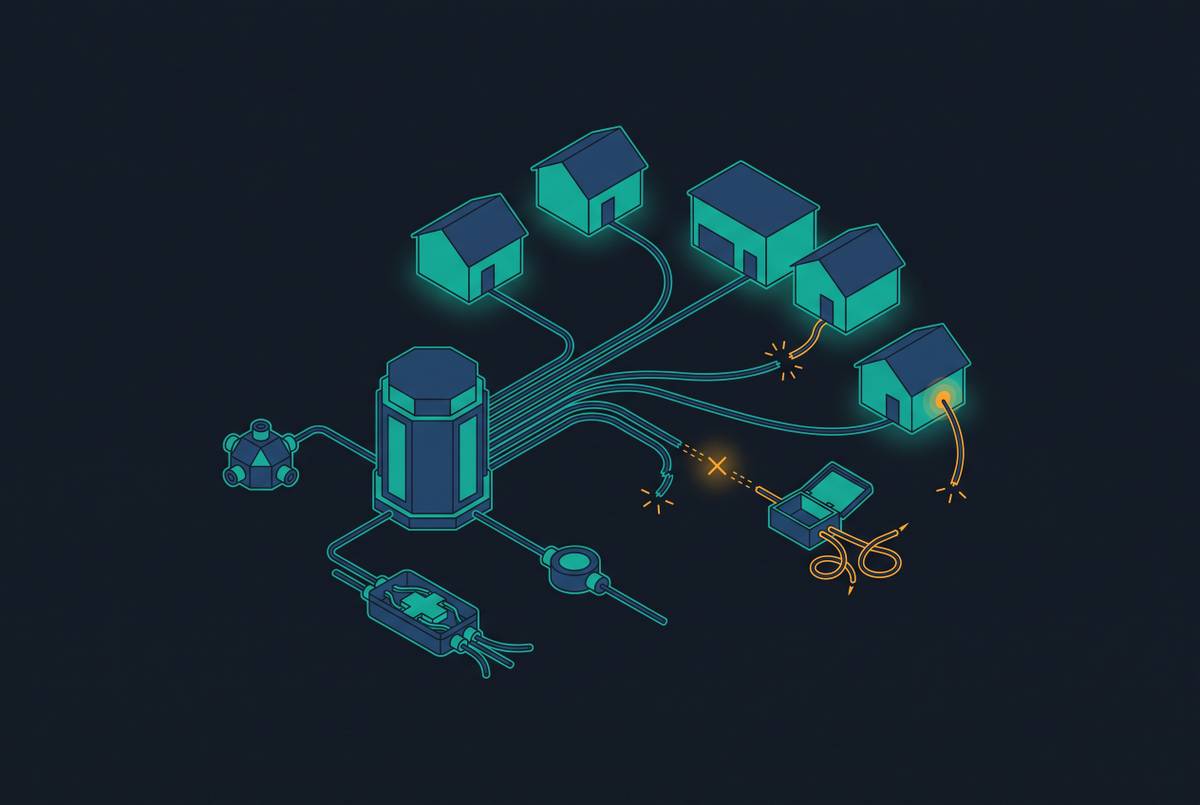
The failure mode this produces is specific. Operators running several access technologies at once are already juggling overlapping data models for each one, and trying to reconcile those divergences by hand simply isn't realistic once volume scales up.
There's a timing mismatch layered on top of the schema incompatibility, and it's arguably worse. Wavelo's 2026 analysis of AI-ready OSS/BSS architecture finds that most billing and CRM systems still run on a nightly batch load, while network alarms and topology data flow into the OSS layer in seconds or minutes. During a Carrier Ethernet activation event that needs real-time circuit validation, that mismatch in timing can corrupt the service state record before billing even gets a chance to see it. It is a clock problem, not merely a design flaw sitting in a database schema. It's a clock problem, and clocks don't wait for reconciliation jobs. The failure mode is specific: an OSS that treats both as "Ethernet" services collapses these differences and creates operational risk, as wrong records get populated, required records get skipped, and the service state the OSS believes exists diverges from what is actually configured on the network.
Where operational failures translate into revenue leakage and deferred activation
None of this stays confined to engineering. Every day that passes between order acceptance and billing start is a day of deferred revenue, and against the capital cost of a fiber build, that gap determines how long the infrastructure takes to pay for itself.
Disconnects between provisioning and billing are a well-known revenue leakage vector, and the mechanism is simple: a billing system can't invoice for a service whose activation state it can't confirm, and when that confirmation depends on a nightly batch cycle, the gap isn't a glitch, it's structural.
DOP EVC path validation and CoS enforcement mean activation events are far more likely to need manual intervention whenever the OSS can't resolve service state on its own, and every manual touchpoint is both a delay and a chance for something to get keyed in wrong.
That matters most for the operators under the most competitive pressure. CLECs pushing into fiber markets are up against rivals who've already invested heavily in delivery infrastructure, and the margin-rich part of the business, managed services and integrated offerings, demands faster and more reliable delivery than commodity connectivity ever asked for. Telcos running outdated OSS/BSS platforms carry real risk to their ability to monetize network investment, and that risk lands hardest in exactly the Carrier Ethernet and managed-service segments operators are counting on for growth.
Why generic OSS platforms fail at the DIA/Carrier Ethernet boundary even when they claim to support both
Plenty of OSS platforms will tell you they support both DIA and Carrier Ethernet. Most do it through bolt-on modules or shared schemas rather than data models built with service-type awareness from the ground up. The failures described above are the predictable outcome of how the systems were built. They're designed in.
The history explains why. Most OSS/BSS platforms started life as separate products, later stitched together, one module for service orders, another for network provisioning, and the seams between those modules are exactly where service-type-specific data gets lost or corrupted. Fiber operators, over time, tend to accumulate best-fit tools for each layer of the operation: network inventory, dispatch, billing, customer management. Each one works fine on its own. The mismatched data models between these tools cause failures at the handoffs between them.
DIA and Carrier Ethernet are structurally different services: one is IP-centric access to the public internet, the other is a private Layer 2 circuit between defined endpoints, and conflating them as "Ethernet services" misrepresents what each actually does operationally. It's data model incompatibility. The fields exist somewhere in the platform, but they aren't mapped to the correct service type at qualification, design, provisioning, or activation. An operator running multiple access technologies on platforms accumulated over decades needs a system that distinguishes service-type logic across qualification, ordering, provisioning, billing, dispatch, upgrades, and troubleshooting all at once. That's the exact point where a mixed network turns into a mixed-up operation.
"We support both, just configure it differently" doesn't hold up under scrutiny. Configuration-level workarounds still run on top of a shared data model underneath, and a shared model doesn't enforce service-type-specific validation or stop records from bleeding across service types. So what would an OSS actually need to look like to close that gap for good?
What service-type-aware OSS architecture requires for DIA and Carrier Ethernet
Handling DIA and Carrier Ethernet correctly requires a unified data model that stays service-type-aware at every stage of the lifecycle, qualification, design, provisioning, and activation, rather than one schema pretending both are generic Ethernet.
At qualification, that means the OSS presents different feasibility checks and pulls from different data entities depending on whether it's qualifying DIA or one of the specific Carrier Ethernet types, E-Line, E-LAN, E-Tree, or E-Access. At design, DIA workflows need to enforce IP block selection and BGP configuration requirements, while Carrier Ethernet workflows need to enforce EVC path construction, CoS tier selection, and UNI configuration. These are separate design grammars entirely, not just different parameter sets on the same form.
At provisioning, the OSS has to maintain separate record types underneath, IP routing records for DIA, circuit segment and EVC identifier records for Carrier Ethernet, while still presenting operators with a single unified operational view on top. At activation, Carrier Ethernet needs real-time circuit validation the OSS can actually execute and log, while DIA needs internet handoff confirmation with upstream peers, and both need a path to billing that doesn't wait on an overnight batch job.
None of this has to mean vendor lock-in. TM Forum Open APIs give operators standardized interfaces so service-type-specific data models can talk to each other across OSS and BSS domains, which is what lets an operator build a genuinely interoperable ecosystem instead of a walled garden. The integrations that carry the most weight in practice are GIS-to-service qualification, linking address data to network availability in real time, provisioning-to-billing, which closes the revenue gap between install and invoice, and field service-to-provisioning, which lets a technician activate service from the same visit, right from a device in hand.
How AI agents change the stakes for service-type-aware OSS
Bring AI agents into this picture and the stakes don't shrink, they multiply. AI agents working across DIA and Carrier Ethernet workflows amplify whatever is already sitting in the data model. If that model is service-type-aware, AI speeds up correct provisioning. If it isn't, AI speeds up errors, at a volume no manual review process could ever keep pace with.
The industry has settled on three rough generations of OSS: legacy platforms that are manual and siloed, AI-augmented platforms where AI gets layered onto an existing stack after the fact, and AI-native platforms where intelligence is designed into the operational architecture from day one. Only the last of these actually delivers on intent-driven orchestration and zero-touch service delivery across network domains and field teams, and even then, only when the data model supports the exact service-type distinctions the AI is being asked to reason about. Agentic AI raises the bar further still, coordinating workflows where several AI agents execute defined outcomes across systems and teams at once, orchestrating customer provisioning across IT systems, network domains, and field operations without a human stepping in to bridge the gaps.
That kind of autonomy demands governance, not as an afterthought but as a load-bearing requirement. Omdia's January 2026 report names the core obstacles: preparing telecom data, integrating AI agents with legacy OSS systems, and establishing real governance control, all because legacy OSS architectures were never built for AI-driven operations and leave data fragmented, siloed, and hard to reach. AI agents need to operate on the same APIs, audit trails, and permission structures as human operators do. That's a substantive mechanism, not a box to check for compliance purposes. It's the actual mechanism that enforces service-type-specific validation the moment an AI agent, rather than a person, executes a provisioning step.
The legal exposure doesn't disappear just because a machine is doing the work. CPNI obligations under Section 222 of the Communications Act follow customer data into any AI system that touches it, and EU AI Act enforcement, beginning in August 2026, layers on explainability, transparency, and traceability requirements for high-risk systems under Annex III, with some of those requirements pushed to 2027 and 2028. Observability into what the AI agent actually outputs, confidence levels, relevance, hallucination detection, reinforces that governance by stopping unsafe or unauthorized actions before they land in a live provisioning workflow.
Put together, an AI-native OSS built on a genuinely service-type-aware, unified data model is the only architecture where AI agents can be productive and accountable at the same time, across DIA and Carrier Ethernet workflows running side by side. That's not a small distinction. AI that makes a broken data model fail faster is not the same as AI that finally makes the model work the way operators have needed it to all along.
Sources
- What is Carrier Ethernet? | Neos Networks
- DIA vs Ethernet: which is right for your business? | Neos Networks
- 2026 Will Demand Smarter OSS, Not Just Smarter Networks - VC4
- How to Transition from AI-Enhanced to AI-Native Architecture | Monterail blog
- Agentic AI for autonomous telecom networks - Ericsson
- Accelerate automation in OSS/BSS with agent fabric - Ericsson