Fiber Network Management Software Selection for CLECs
A unified data model across workflows cuts the operational friction that erodes CLEC margins.
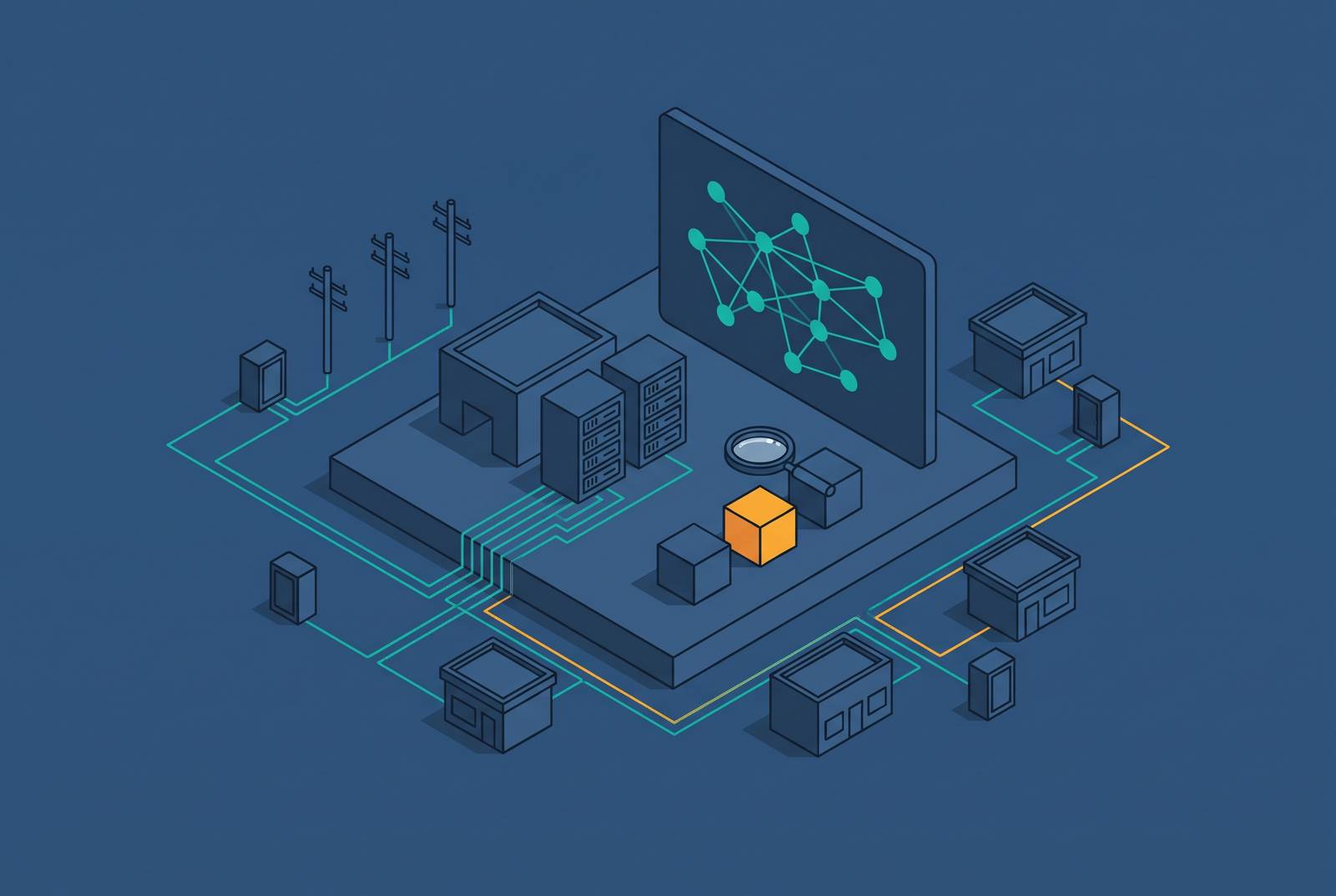
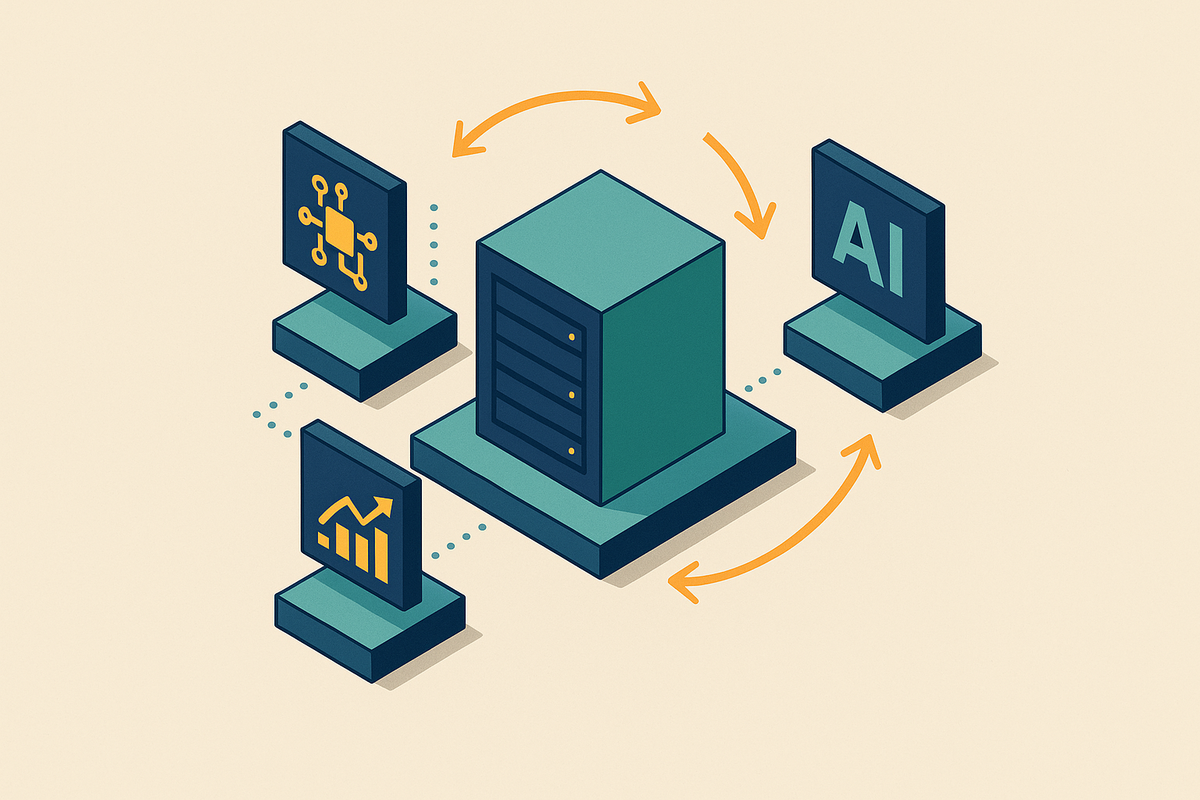
Selecting fiber network management software is a strategic decision for CLECs because the architecture determines how much operational friction accompanies every service order. The strongest evaluation framework centers on one requirement, namely a shared data model across qualification, design, provisioning, and activation. AI capabilities, governance, service coverage, and migration support must strengthen that shared foundation across the stack.
Why fiber network management software is a strategic decision, not a procurement choice, for CLECs
CLECs have thin margins and enterprise-grade service commitments as their infrastructure shifts from copper to fiber. There is little room for internal waste. Unlike incumbent carriers that can absorb operational inefficiency across large subscriber bases, a CLEC feels the cost of fragmented tooling directly in delivery speed and service economics. The choice of software therefore affects whether the operator can meet its commitments without using scarce staff time to reconcile systems.
That constraint is particularly important for dedicated fiber, Carrier Ethernet, and managed network services. These services require precise, coordinated workflows. A commercial opportunity must pass through qualification, design, provisioning, and activation before it becomes a delivered service. If those stages rely on disconnected records, the operator must fill the gaps through reconciliation, re-keying, or delays in handoffs. That work is still needed after the physical fiber build-out.
The OSS layer determines how much of this work remains necessary. A platform can protect margin by keeping service delivery coordinated, or erode it by turning each handoff into another task. For that reason, the selection decision extends beyond the software budget. It establishes the operational structure through which the CLEC will deliver services and support enterprise demand.
What legacy OSS architecture actually costs a CLEC in daily operations
Legacy OSS platforms were built to run work in batches in the copper era. Real-time fiber delivery exposes that architectural mismatch. When systems update in batches, qualification answers, inventory positions, and provisioning status can show the network as it was yesterday. Each stage then makes decisions using data that may already be too old for what the next stage needs.
Fragmentation compounds that lag because separate tools maintain separate views of the order and network. Qualification may end in one system while inventory and provisioning are still in others. The handoff requires reconciliation rather than a straightforward continuation of the work. At each boundary, orders can stall and errors can creep in, while translating data takes staff time away from delivering service. The cost recurs with the workflow, including when systems function normally.
This is why license and infrastructure bills do not capture the full cost of legacy OSS. Slow provisioning and activation rework consume resources without appearing as a single modernization expense. Enterprise customers who do not renew add another consequence to that operational drag. The claim that existing systems are “good enough” is incomplete unless it accounts for the recurring work required to make them function together.
Why AI-augmented legacy is not the same as AI-native, and why the distinction matters for buyers
The dominant vendor response to these shortcomings has been to add AI over existing systems. That can leave the underlying architecture unchanged. An AI layer above a batch-driven OSS still depends on the freshness and consistency of the data below it. It may generate a recommendation, but it cannot act on a real-time network state it has never received.
HCLTech’s 2026 AI-native telco analysis defines an AI-native telco as a unified, AI-infused technology fabric in which cloud, edge, data, and network function as one integrated operating architecture. Ericsson’s 2026 framework similarly describes AI as intrinsic across the network and OSS/BSS, “not bolted on or isolated as a separate AI layer.” The distinction is architectural. It concerns the relationship between intelligence, operational data, and execution.
Automation depends on that relationship to close the loop. A provisioning or anomaly-detection agent remains constrained if its system of record updates only on a batch cycle. Ericsson’s framework instead describes specialized agents working across RAN, transport, core, and OSS/BSS within shared boundaries and clear policies. It also uses network digital twins to test actions safely before they run. These capabilities depend on more than a separate reasoning layer.
For a CLEC, the resulting procurement question is concrete. Does the AI operate on the same live data model as human operators, or does it run as a separate process that queries a copy of the data?
The case for a single unified data model across qualification, design, provisioning, and activation
Qualification establishes the first operational basis for a service order. When it uses the same model that provisioning will act on, the answer does not need translation into another system’s version of network availability. Accuracy begins at the front of the process. Errors caught there need not resurface as expensive rework during activation, because downstream stages work from the same qualifying data.
Design then develops the order within that shared network model rather than receiving an exported interpretation of it. If a qualification result changes, the change propagates downstream without a manual transcription step. Provisioning acts on the same model instead of reconciling design records with a separate inventory view. Activation completes the sequence without another data handoff between independent schemas. Order-to-activation time compresses because the transitions occur inside one system.
Service diversity makes this continuity especially useful. FTTH, dedicated internet, and Carrier Ethernet place distinct workflow demands on the OSS layer, but those differences do not require disconnected operational foundations. A unified platform runs those workflows on the same model without keeping a separate set of rules for how each service type works. The service requirements remain distinct while the network data stays consistent. This allows workflow complexity to be handled without multiplying conflicting records.
API integration alone does not establish that consistency. Separate domain systems still retain their own systems of record, and divergent records can return conflicting answers that a person must resolve. A unified model removes the need to reconcile those records. It also gives AI agents the current, consistent information required for anomaly detection, predictive provisioning, and capacity planning. HCLTech’s analysis describes the corresponding shift from isolated automation scripts to reusable AI models that continuously learn across OSS, network orchestration, and service assurance.
Governed AI as a selection criterion, not a compliance checkbox
A shared model makes substantive AI work possible, but it does not by itself make autonomous execution trustworthy. Operators also need enforceable limits on what AI can do. Without the audit trail, permissions, and accountability applied to human operators, AI introduces an ungoverned execution path into critical infrastructure. That weakness can leave a capability unused because no one will accept responsibility for its actions.
A governed platform distinguishes routine configuration changes within known bounds from changes that require human approval. Clear rules must set out how to approve service changes that affect a large enterprise customer or a network segment. Those distinctions must be written before deployment. They cannot depend on discovering the limits after an incident. For enterprise service delivery, the operator must be able to explain what changed, when it changed, who or what authorized it, and why.
Ericsson’s framework uses network digital twins to control how actions are carried out. AI actions can be tested safely before they reach live infrastructure, so what was predicted can be compared with what happened. Testing thus becomes part of the controls, so trust rests on more than a recommendation. Does the AI use the same APIs, permission tiers, and audit logs as human operators, or does it take a separate path that skips those controls?
What a phased migration to a unified platform actually looks like for a CLEC
A unified end state does not require every workflow to move at once. Capable platforms support a phased transition. For a CLEC, this is an operational requirement because gaps between legacy systems and the new platform can become customer-facing service problems. The sequencing must absorb migration risk incrementally.
Qualification and inventory are established first on the unified data model as the system of record. Billing, provisioning, and field service then connect progressively to that foundation. This order establishes which network model the other workflows will use before attempting to move them all. Each new connection removes a reconciliation step that used to take up staff time. The foundation becomes useful during migration.
This approach differs from leaving several domain records permanently connected through integrations. The transition has an explicit destination and an authoritative model from the outset. Legacy workflows can keep running while the new foundation takes on that role, if the platform supports it. Selection therefore needs to examine the supported transition architecture as closely as the finished platform. Can the vendor run the new platform with legacy systems during migration, with the shared model acting as the system of record from day one and no hard cutover required to go live?
A working evaluation framework for CLECs selecting fiber network management software
Feature availability is not sufficient evidence. A qualification tool, an AI agent, and an activation workflow may all be present without sharing the same foundation for their work.
Does qualification, design, provisioning, and activation operate on a single shared data model, or do integrations connect separate records that can diverge? The test is a change to a qualification result. Its effect should propagate automatically to downstream stages. This exposes whether the platform removes a handoff or merely provides another way to perform it.
Does the AI reason over the same real-time model that human operators use, or query a batch-updated replica? The test is whether it can trigger provisioning based on current network state and place that action in the same audit log as a human-initiated action. A recommendation alone does not answer the question. The demonstration must connect the data used for the decision with the resulting operational action.
Does the permission architecture enforce which AI actions are autonomous and which require human approval? The test is a complete, queryable audit trail for every AI action, including the data state it acted on and the policy that authorized it. Enforceable approval tiers turn written intentions about expected behavior into an operational control.
Does the platform support FTTH, dedicated internet, and Carrier Ethernet natively on the same model, or require separate configuration or modules for each? The test is whether a single operator can handle a Carrier Ethernet order and an FTTH activation in the same interface without changing systems or translating schemas. A common interface alone is insufficient. The workflow must also preserve the shared operational model beneath it.
Does the vendor support phased coexistence with legacy systems while making the new model authoritative from day one? The test is its reference architecture for the initial transition period, identifying which workflows move first and which remain on legacy systems. Showing how the platform works at the end of migration cannot show whether the CLEC can get there without a hard cutover.
A platform answering all five questions well fits the CLEC’s requirement for an AI-native OSS, while one answering only two or three remains a point tool with a broader roadmap. Over a three-to-five-year operational horizon, that distinction separates demonstrated architectural capability from an expectation of future consolidation. The selection should rest on the former, because the recurring cost to remove is the reconciliation work embedded in every order.