Network Service Qualification Automation
Unifying inventory and provisioning systems eliminates manual qualification bottlenecks and errors.
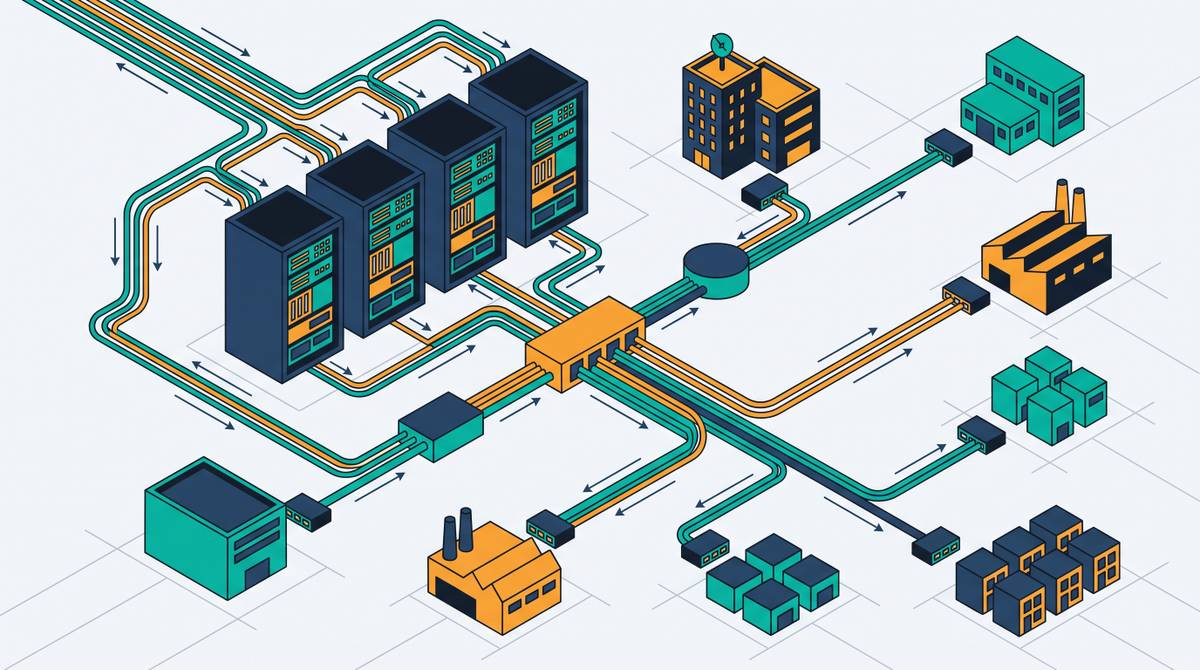
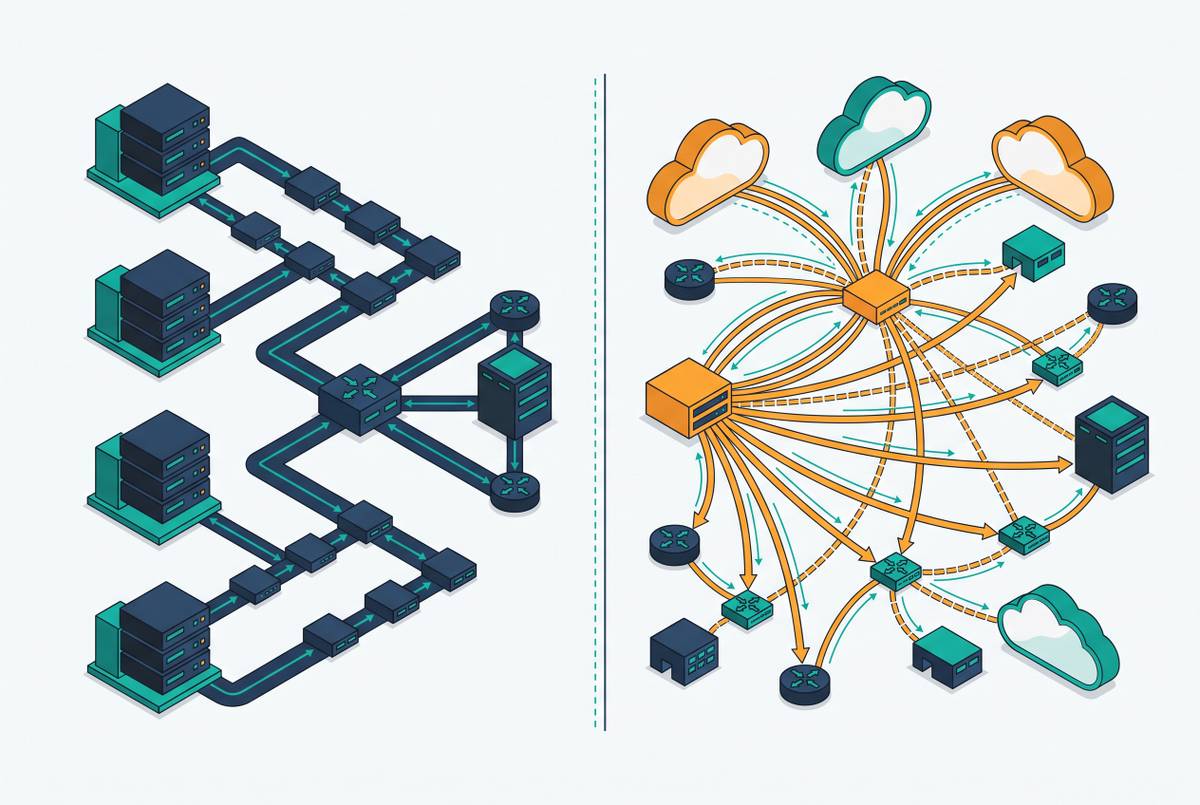
Legacy OSS wasn't designed for qualification. It was designed as a reactive, back-office function monitoring faults, managing configurations, tracking inventory after the fact. The architecture reflects that origin honestly. Inventory systems, address databases, order management platforms, and provisioning tools operate as separate point solutions, each maintaining its own data schema, its own update cadence, and its own working definition of what a network element or a service address actually is.
Qualification logic, in this environment, lives wherever someone first wrote it down. Spreadsheets. Custom scripts. Siloed applications that no longer have a named owner. A serviceability check run against the inventory system at 9 a.m. reflects a network state the provisioning system won't see for days, if ever. None of these artifacts share state with the rest of service delivery, and the longer they go unreconciled, the more confidently wrong they become.
The consequence is structural, not incidental. Qualification becomes a chain of manual hand-offs, each introducing latency and its own opportunity for transcription error, misinterpretation, or stale data. Fiber service providers have felt this acutely: the sheer volume and granularity of fiber plant records, ONT inventory, and splitter capacity data make reconciliation across separate systems especially punishing. You can paper over it with process checkpoints and additional reviewers. The underlying architecture will keep generating the same problem, at the same rate, indefinitely.
The retrofit instinct is understandable but doesn't hold. Adding an AI layer or an automation tool onto fragmented infrastructure adds another layer of data translation and integration overhead between systems that were never designed to communicate. EY's 2024 research found that 98% of telecom operators report needing to modernize their BSS platforms to meet current service demands. That figure isn't revealing a hidden problem. It confirms that virtually the entire industry already knows its current tooling is inadequate. The open question isn't whether to modernize. It's whether the modernization addresses the right layer.
What Changes When Qualification Becomes a System-Driven, Continuous Process
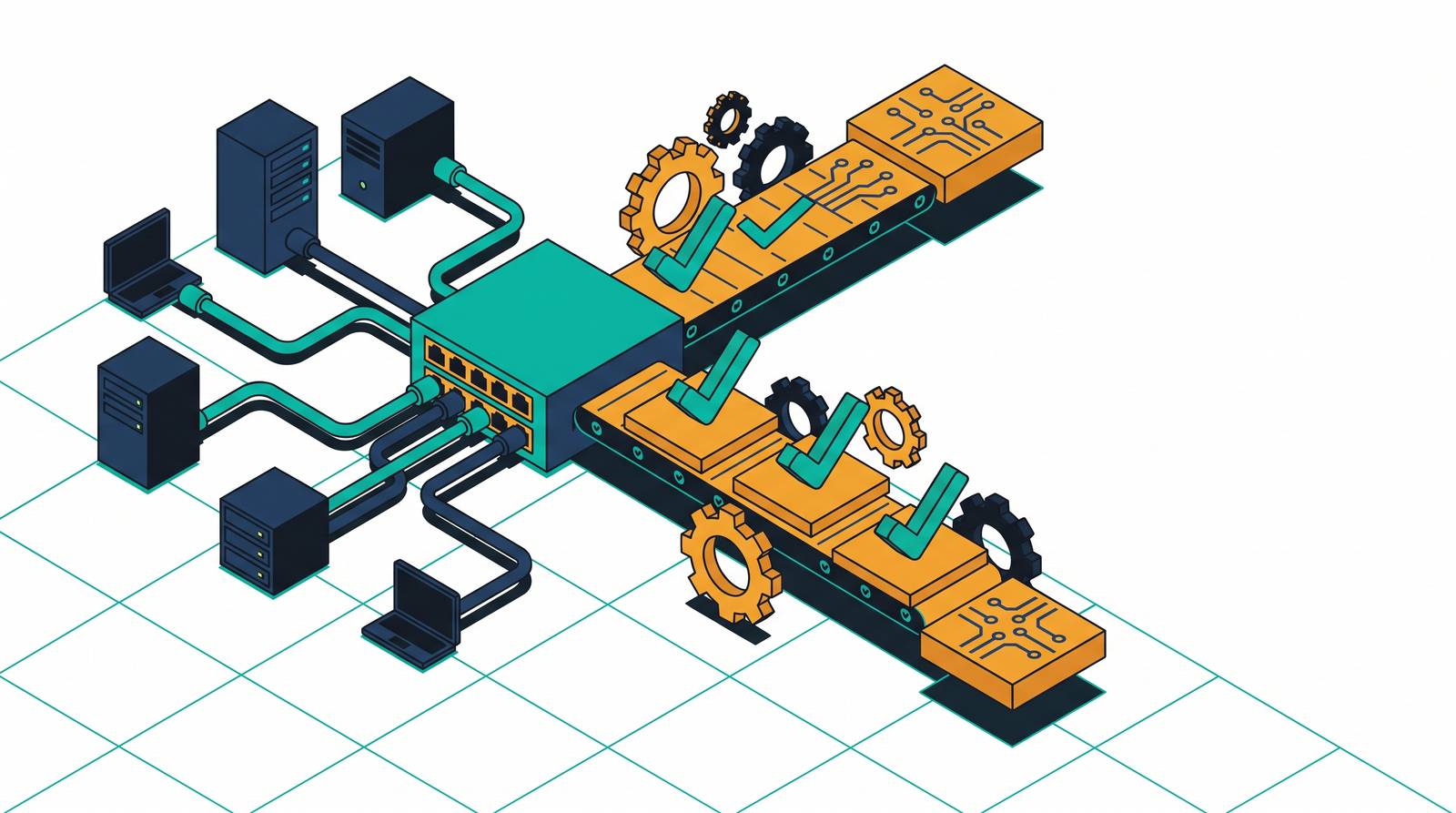
Automated qualification replaces sequential manual checks with a parallel, real-time query against a live inventory and topology model. The difference in clock time is not marginal: a process requiring hours or days of human effort executes in seconds. But the more significant change is architectural.
Address validation happens at the moment of order entry, not hours later when a human reaches the task queue. Serviceability checks run against current network inventory, not a snapshot from the last manual sync. Feasibility scoring, whether a viable path exists at what bandwidth and with what SLA ceiling, is applied algorithmically and consistently, without the interpretive variation that accumulates across a team of operators working from different versions of the same data.
For Carrier Ethernet specifically, MEF LSO APIs provide a standardized interface for address validation, serviceability checking, and ordering. An OSS architected to consume these APIs directly eliminates the manual translation step that otherwise sits between a service request and a standards-compliant qualification result. MEF 6.3 and MEF 10.4 define the service attributes qualification must validate, including bandwidth profiles, QoS parameters, UNI attributes, and service type. Automation applies that logic consistently across every order, not case by case.
Continuous re-qualification is the change most operators underestimate. The system re-qualifies services when network conditions shift, flags commitments that have become at-risk before they become service failures, and feeds real inventory data back into sales tooling and capacity planning. The period between order placement and activation is the most friction-visible part of the entire service relationship, and it's exactly where the shift from reactive to predictive becomes visible to customers in ways they can feel and describe.
FTTH makes this concrete. Zero-touch provisioning eliminates truck rolls for service upgrades across SFU, SBU, and MDU deployments. Qualification accuracy is the prerequisite. A clean, automated qualification result is what allows provisioning and activation to proceed without operator intervention. Any error in the qualification record propagates forward into every subsequent step, compounding as it goes.
Why Qualification Automation Breaks Down When It Runs on Isolated Data
It's a plausible move: automate the qualification step, route it through a modern workflow engine, measure the speed improvement. The improvement is real. But if that automated step remains disconnected from design, provisioning, and activation, the integration problem hasn't been eliminated. It's been relocated.
What follows is predictable. A qualification result is stale by the time provisioning runs because inventory changed between the two steps and no mechanism exists to propagate that change across the system boundary. Design and provisioning teams work from a different view of the network than the one qualification checked against, because each system maintains its own record of the same physical infrastructure. Activation errors trace back to mismatches between what qualification approved and what the provisioning system actually encounters.
Each hand-off requires translation, re-validation, or manual reconciliation, which negates much of the speed gained from automating qualification in the first place. This is an architectural failure, not a process one. When qualification, design, and provisioning each touch a different record of the same network element, error is guaranteed by structure. Training and discipline can't fix it. Appledore Research estimated global spend on next-generation OSS/BSS at approximately $18.25 billion against roughly $1.68 trillion in total telecom spending in 2025. The proportion reveals how much of the industry is still running qualification and provisioning on infrastructure that was never designed to support integrated automation.
How a Unified Data Model Makes Qualification a Connected Step Rather Than an Isolated Check
A unified data model means, precisely, that qualification, design, provisioning, and activation all read from and write to the same authoritative record of the network. This is a live, operational shared state that every function in the delivery workflow uses simultaneously, not a reporting layer or a data warehouse abstraction.
The practical consequences for qualification are significant and not obvious until you've watched a siloed stack fail in slow motion. A qualification result doesn't need to be re-checked or reconciled when the workflow advances to design, because both steps share the same inventory state. Capacity reservations made during qualification hold through to provisioning without a separate integration step; there is no system boundary to cross. Changes to network topology update in one place and are immediately visible to qualification logic.
Service-type-specific attributes are defined once within the model and applied consistently across every stage of delivery, including MEF bandwidth profiles, QoS parameters, and UNI definitions for Carrier Ethernet; ONT and splitter records for FTTH; and port availability and route feasibility for dedicated internet. The semantic modeling dimension matters here as well. Linking key entities, customer, service, network element, address, means a qualification check automatically has access to all relevant relationships, not merely the fields visible in a single system's record.
Qualification becomes a continuous function rather than a gate. The system re-qualifies in the background, surfaces degraded feasibility before it becomes a service failure, and feeds real inventory data into the sales tooling that customer-facing teams rely on. These aren't process improvements layered onto a legacy model. They are the direct structural consequences of a different architecture.
Where AI Fits Into Qualification, and What Governed AI Means in Practice
Rule-based automation handles deterministic qualification checks well. Fixed address validation logic, binary serviceability flags, hard capacity thresholds — these are exactly the cases where rules perform reliably and should be left to rules. The edges are where rules break down.
Ambiguous addresses that don't match inventory records cleanly. Capacity conditions that are borderline rather than clearly sufficient or insufficient. Novel service configurations that don't fit existing templates. These cases require pattern recognition across historical orders, topology data, and service outcomes to surface feasibility signals that rules miss. That is where AI earns its place in a qualification workflow, not by replacing deterministic logic, but by extending it into the territory where determinism runs out.
Multi-step qualification workflows, from address lookup through inventory check through feasibility scoring to design selection, are precisely the kind of sequential, bounded-objective task that AI agents are well-suited to execute end-to-end. Light Reading and the Fiber Broadband Association have both identified the period around 2026 as when this kind of agentic deployment moves from pilot to operational norm in the carrier space.
Governance gets underspecified in most discussions of AI deployment, and that gap carries real consequences. AI agents running qualification decisions must operate on the same APIs, audit logs, and permission structures as human operators. Every automated qualification decision must be traceable, covering what data was queried, what logic was applied, and what the outcome was. Qualification is the origin record for a service commitment. Its provenance must be defensible for billing accuracy, SLA compliance, and regulatory reporting alike. An opaque qualification result isn't a qualification; it's a liability.
When an AI-driven qualification check rejects a service request, the operator needs to understand why. Human operators must be able to review edge cases, override automated decisions, and set the policy boundaries within which agents operate. The system governs both the agent and the operator, and that governance structure must be legible to the humans responsible for the outcomes.
What This Architecture Looks Like for FTTH, Dedicated Internet, and Carrier Ethernet Operators Specifically
The qualification inputs differ by service type. The architectural requirement is identical across all three.
FTTH
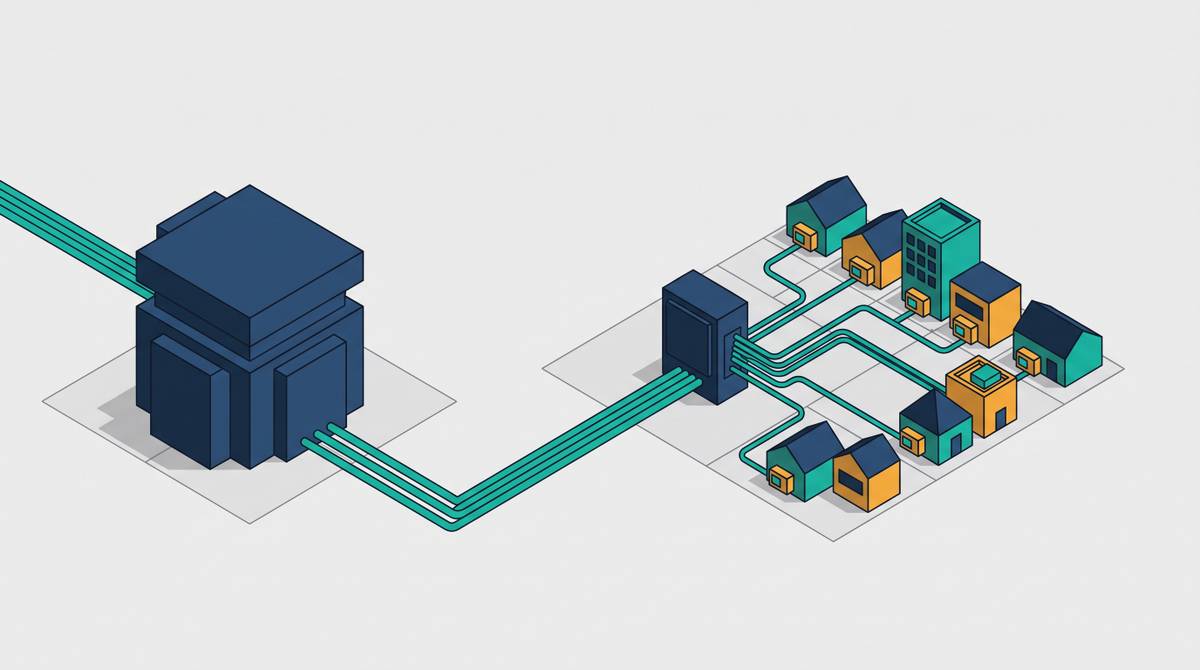
Qualification for fiber-to-the-home must reconcile fiber plant records, ONT inventory, splitter capacity, and address data. In a legacy stack, these live across three or four separate systems, each maintained by a different team on a different update schedule. Automated qualification enables zero-touch activation: once qualification is confirmed and clean, provisioning and activation run without operator intervention. MDU and bulk deployment scenarios multiply the qualification volume dramatically. At the scale of Western Europe's roughly $270 billion fiber infrastructure commitment through 2025 and the United States' roughly $150 billion in planned deployments between 2024 and 2029, manual qualification workflows are not a process inefficiency. They are a disqualifying constraint on deployment speed, full stop.
Dedicated Internet
Qualification for dedicated internet involves port availability, bandwidth capacity at the access layer, and route feasibility to the customer's physical location. Enterprise buyers expect fast, accurate quotes, and qualification speed directly shapes sales cycle length. In competitive enterprise markets, a quote requiring days to validate is frequently a lost sale, not a delayed one. The more consequential risk is a qualification error that surfaces during provisioning, after SLA commitments are already contractually in place. The cost isn't just the re-work. It's the SLA credit, the relationship damage, the credibility cost that compounds over subsequent renewal conversations.
Carrier Ethernet
MEF 6.3 and MEF 10.4 define the service attributes qualification must validate, including bandwidth profiles, QoS parameters, UNI attributes, and service type across E-Line, E-LAN, and E-Tree configurations. MEF LSO APIs provide the inter-provider interface for address validation, serviceability, and ordering. An OSS architected to consume these APIs directly executes Carrier Ethernet qualification without manual translation between the standards layer and the operational layer. Carrier Ethernet is a multibillion-dollar global services market, and qualification errors at this layer carry correspondingly large commercial consequences, measured in SLA penalties, customer churn, and regulatory exposure.
All three service types require the same foundational inputs: inventory, topology, capacity, address. A unified data model serves all three simultaneously. Siloed tooling forces redundant, inconsistent qualification logic for each, compounding both the operational cost and the error rate.
The Operational and Competitive Consequences of Treating Qualification as a Back-Office Afterthought
Time-to-revenue is directly linked to qualification speed. A service that can be qualified and provisioned in minutes competes differently than one that takes days. Days lost in qualification are days of revenue deferred, and in competitive markets for enterprise and residential fiber, deferral frequently becomes attrition.
Qualification errors that surface late are disproportionately expensive. Truck rolls triggered by provisioning failures that a clean qualification would have prevented. SLA penalties on enterprise Carrier Ethernet or dedicated internet contracts committed before a feasibility problem was identified. Re-work in design and provisioning when qualification data was stale or incomplete. The cost doesn't scale linearly with the stage at which the error surfaces; it compounds, because every downstream step that followed the bad qualification record must be unwound and re-executed.
For FTTH and dedicated internet buyers, the period between order and activation is the most friction-visible part of the customer relationship. Qualification errors extend it and create negative first impressions at the exact moment when the operator has the most to gain from a clean experience. This is a revenue recognition problem as much as an operational one.
The strategic dimension matters equally, and here the calculus is worth stating plainly. Operators who invest in qualification automation as part of a unified delivery stack can offer real-time serviceability checks through sales and self-service channels. A sales team that can confirm serviceability and quote accurately in real time closes differently than one that has to promise a follow-up in 48 hours. That gap is measurable in win rates, even if few operators are currently measuring it.
The OSS/BSS market reflects the stakes: valued at roughly $65.81 billion in 2024, projected to approach $148.26 billion by 2033 at a 9.4% CAGR, according to IMARC Group. Operators who treat qualification as a back-office afterthought are making a strategic choice, whether or not they've named it as one.
What Purpose-Built, AI-Native OSS Does Differently for the Qualification Workflow
There is a meaningful distinction between AI-augmented and AI-native, and it has direct operational consequences that operators tend to discover only after they've tried the augmented path and hit its ceiling. AI-augmented means qualification automation attached to a legacy OSS that was not designed for it: integration overhead, data translation at every boundary, governance gaps between the AI layer and the system of record. AI-native means qualification logic, AI agents, human operators, and the full service delivery lifecycle operating on the same data model, the same APIs, and the same audit infrastructure.
For qualification specifically, purpose-built means that qualification is not a plugin or an integration point. It is a native function within the same system that handles design, provisioning, and activation. Inventory, topology, and address data are authoritative and shared; qualification checks run against the current state of the network because there is no secondary system to drift from it. AI agents executing qualification workflows operate under the same permissions and produce the same audit records as human operators performing identical checks. Service-type-specific logic for FTTH, dedicated internet, and Carrier Ethernet is built in, not configured around a generic framework designed for a different problem.
This standard requires an OSS architecture that treats qualification as a first-class function within a unified data model. Qualification, design, provisioning, and activation share a single authoritative view of the network: the capacity reservation made at qualification holds through to activation without a reconciliation step, and a network topology change propagates to qualification logic without requiring a manual sync. AI agents operating within such a system run under the same governance structures as human operators, with traceable decisions, auditable outcomes, and operator-controlled policy boundaries.
Legacy OSS, however augmented, cannot deliver the qualification speed, accuracy, and continuity that modern service delivery demands. Operators who treat qualification as a strategic function, integrated, automated, governed, and built on a unified data model, are the ones for whom zero-touch provisioning, real-time serviceability, and scalable deployment are operational realities rather than roadmap aspirations.