Self-Serve Portals for Service Provider Operations
Customers expect self-service portals to work, but fragmented back-end systems make them fail.
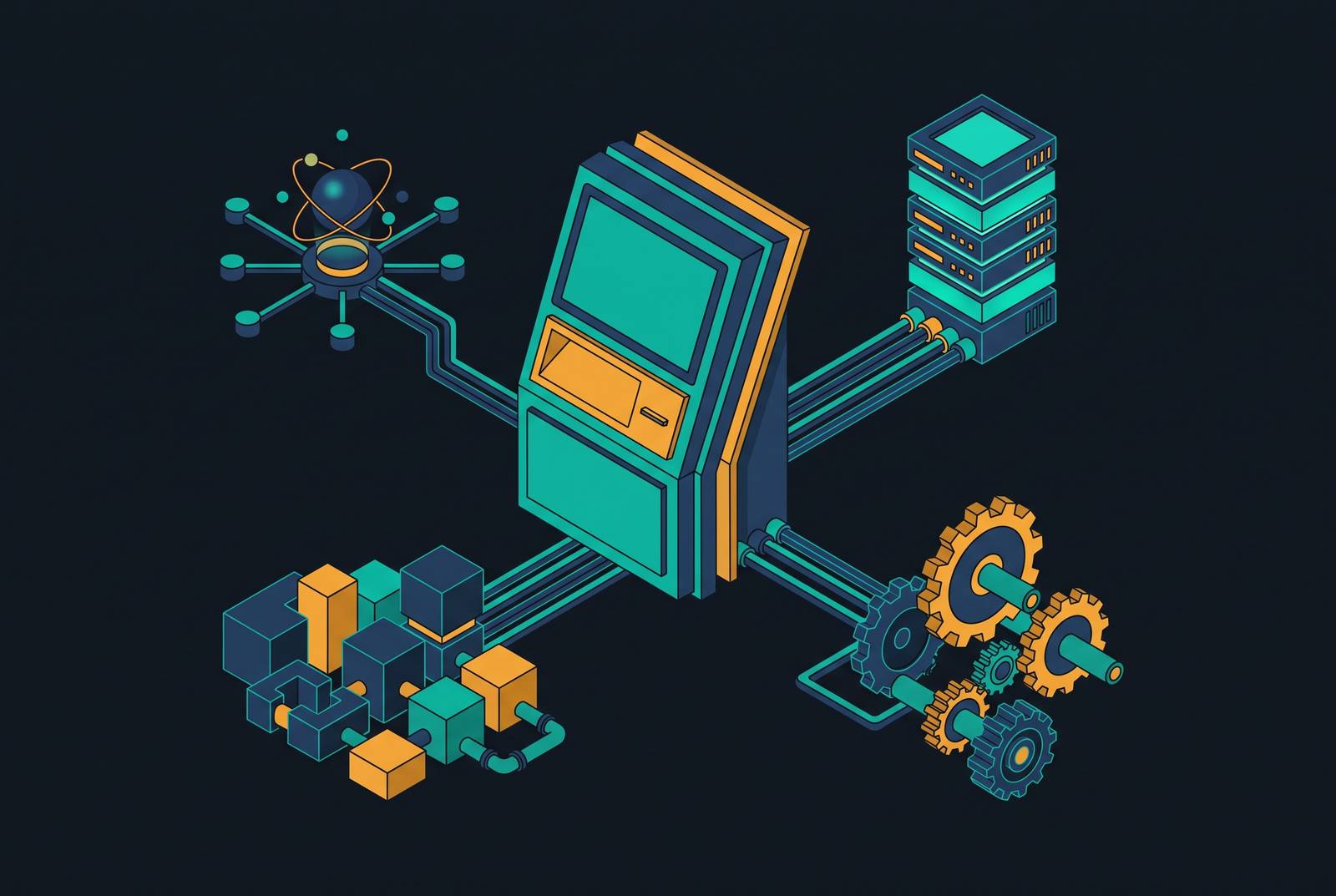
A self-serve portal that lets a business customer check an order, view an invoice, or track a ticket is only as good as the systems feeding it. That is the whole argument here. Build the portal on a unified data model spanning qualification, design, provisioning, and activation, and it works the way it is supposed to. Build it on the fragmented back-end most operators actually run, and the portal turns into a new place to store the same old inconsistency.
For this piece, a self-serve portal means a secure, customer-facing interface where a B2B client manages accounts, views invoices, checks usage, submits support requests, and gets live visibility into tickets and service status, all without picking up the phone. That definition has shifted in weight over the past several years. Portals used to sit behind the call center as a backup channel. Now they are the front door. How a portal performs shapes satisfaction and loyalty and, downstream, how much manual labor the operator's own staff carries.
The demand side is not ambiguous. Somewhere between 61% and 80% of customers say they would rather solve a problem themselves than call someone, and that range holds up even among enterprise and carrier-grade accounts, the buyers least likely to tolerate a clunky interface. Cost pressure points the same direction: a routine support call starts at $7 to $12 before an agent does anything beyond pick it up. Deflecting even a fraction of that volume onto a portal is not a nice-to-have line item, it is a budget line with a clear payback.
For a service provider, though, the portal has to do more than a consumer billing app ever did. It needs qualification checks, order status, provisioning updates, and activation visibility, on top of invoices and usage. That is a materially harder data problem than consumer self-care ever posed, and it raises the real question underneath this whole category: what does a portal actually need to connect to, underneath the UI, to deliver on what it promises?
What happens when a portal sits on fragmented back-end systems
The failure pattern is familiar enough that it barely needs describing anymore. IT proposes a portal. Architecture review turns up legacy dependencies scattered across billing, provisioning, and CRM. The project stalls pending a BSS/OSS modernization effort that was never scoped for this. Two years pass. Scalence's research on telecom self-service strategy documents this exact sequence, and it is not an edge case, it is close to the default.
The root cause sits below the portal entirely. Telecom IT organizations tie 56% of their costs to outdated systems, a figure that makes clear this isn't a marginal inefficiency sitting at the edges. It is structural, load-bearing, and expensive to work around.
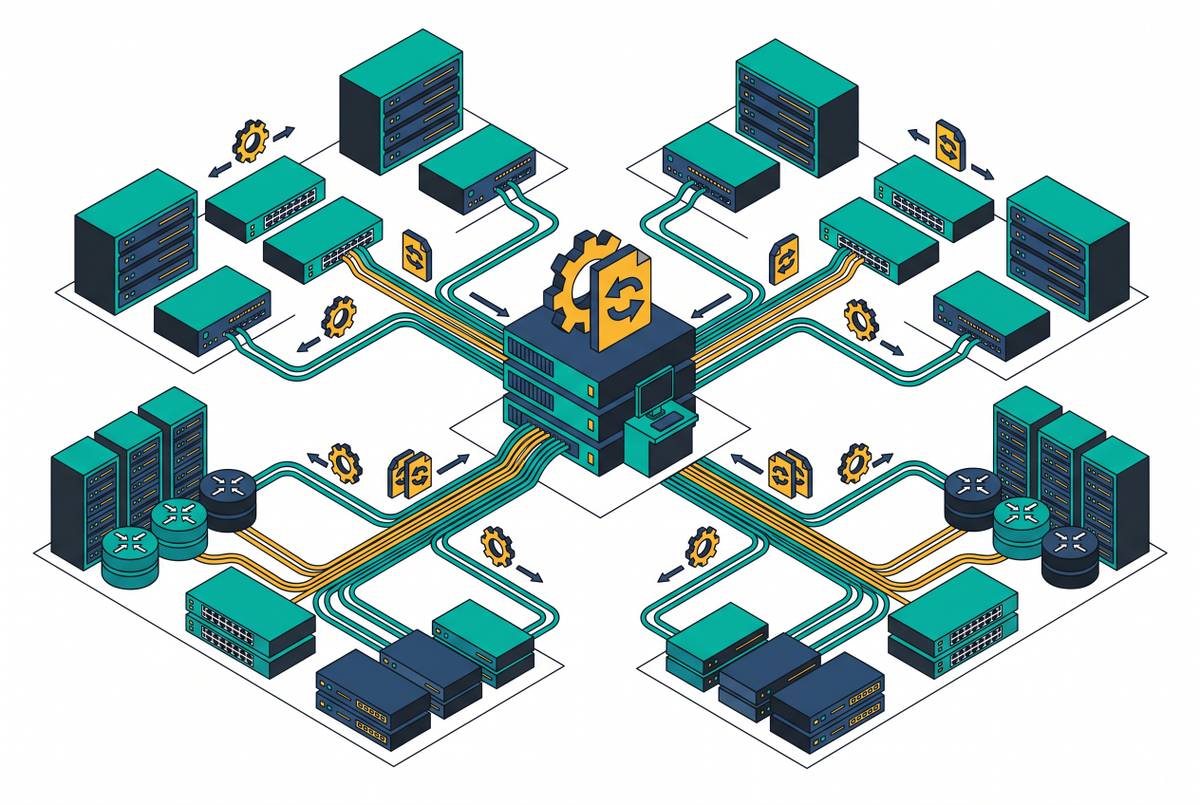
Picture what fragmentation actually looks like day to day. Qualification data lives in one system. Order management lives in another. Provisioning state sits in a third, and none of the three talk to each other in real time. A customer checks service eligibility on the portal and gets one answer, while the order desk, pulling from a different system, gives a different one. Provisioning status on the portal lags what is actually happening on the network, because the portal is polling a database that only updates in batch, not a live source of truth. A support ticket opened through the portal doesn't carry the provisioning or activation context the operations team needs to act on it, so someone has to go find that context by hand.
None of that is self-service. It's shifted labor. The customer gets an inconsistent answer, calls in anyway because the portal didn't actually resolve anything, and the agent on the other end still has to reconcile data across three or four systems just to answer the question the portal was supposed to handle. Around 64% of telecom operators point to legacy integration complexity as the main barrier to modernization, largely because proprietary interfaces demand custom integration work for every new service, and every one of those integrations is fragile by design. Layer a portal on top of that, and the portal doesn't become a window into operational truth. It becomes one more silo, stacked on the silos already there.
What a unified data model across the service delivery lifecycle actually means
Four stages make up the service delivery lifecycle a portal has to connect to: qualification, design, provisioning, and activation. In a well-built architecture these are not four separate systems bolted together. They are four stages reading from and writing to one data model.
Qualification answers a specific question: does the network support the requested service at this address, right now? That answer has to come from live inventory. A static coverage database that gets updated once a week is not qualification, it's a guess with a timestamp on it.
Design picks up from there, working out what configuration, capacity, and routing will actually fulfill the order. For design to mean anything, it has to trace forward into provisioning and backward into the qualification decision that triggered it in the first place. Otherwise design exists in isolation, disconnected from both what came before it and what happens after.
Provisioning is the translation layer, turning a design into actual instructions sent to the network. The state of that provisioning process needs to be visible as it happens, not inferred later from a batch job that ran overnight. And activation, the final stage, confirms the service is live and performing to spec. That activation event should close the loop back to the original order record. It should not exist only as a line in a network element's log file that nobody outside operations ever sees.
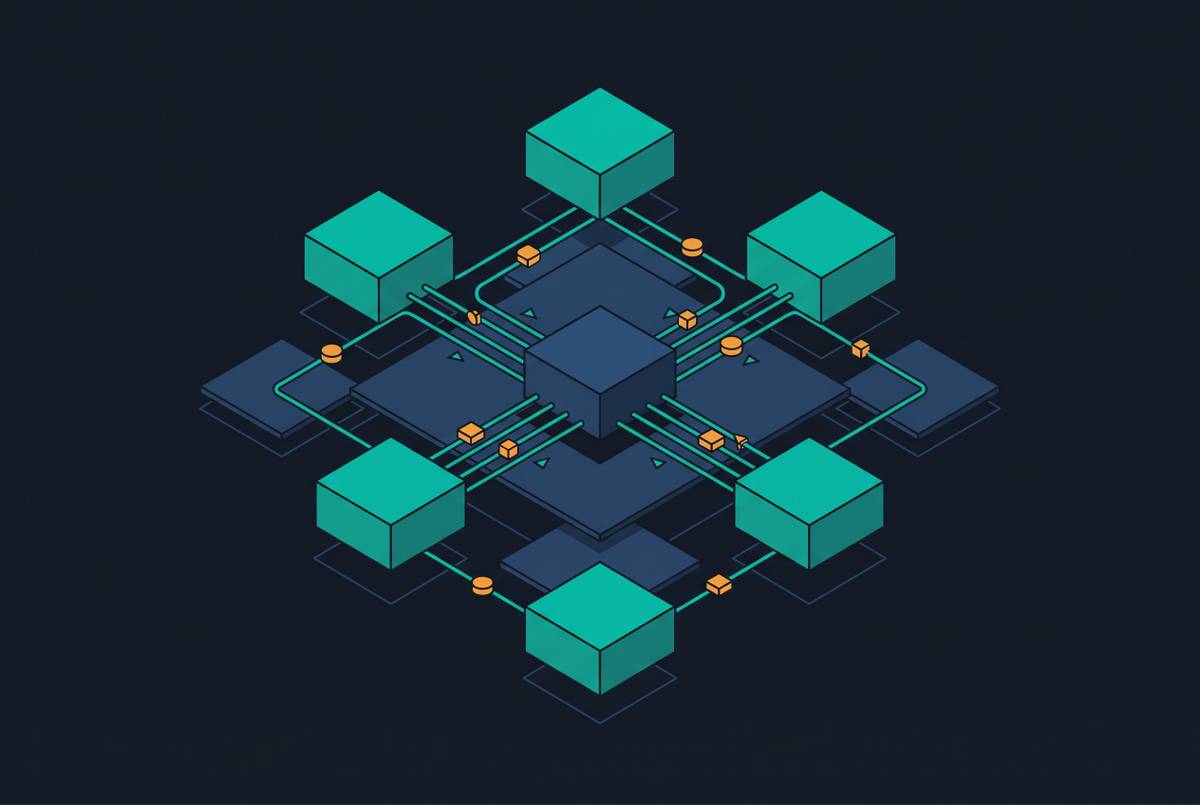
The reason a single data model matters comes down to something almost mechanical: when qualification, design, provisioning, and activation all share one model, a portal query at any stage returns a consistent, current answer, because there is only one version of the truth to query. OSS has historically handled network operations while BSS handled billing and customer management, a split that blocks the kind of unified view that spans the customer, the network, and the business all at once. The data model is the prerequisite. The portal's interface is just the last mile.
Why legacy OSS architectures cannot provide that foundation
Legacy OSS was built for a different job than the one it's being asked to do now. Rigid and batch-driven by design, it was never built to handle real-time telemetry, intent-based orchestration, or closed-loop automation, because none of those were requirements when it was built.
Proprietary integrations compound the problem into something closer to lock-in. Every new service requires custom integration work, and every one of those integrations is fragile enough that a schema change somewhere upstream can break it. The OSS estate, in practice, functions as an anchor rather than a launchpad. The picture that emerges from industry analysis is plain: legacy OSS architectures were never designed for AI-driven operations, and the result is data that's fragmented, siloed, and hard to reach even when you know exactly where it lives.
There's a cost to papering over that instead of rebuilding it. McKinsey's State of AI 2025 research found that organizations bolting AI onto data stacks they never modernized carry maintenance costs two to three times higher than organizations running cloud-native, modular architectures. Bolting AI onto a legacy system doesn't fix the legacy system. It just adds a second thing that now also needs maintaining.
For portals specifically, the consequences are direct. A portal layered on top of legacy OSS inherits every data consistency problem the legacy system already has, without exception. Real-time qualification checks need real-time inventory, and legacy OSS can't supply that without bolting on a separate integration layer, which then becomes its own maintenance burden. Provisioning status shown through the portal is only ever as current as the slowest batch process feeding it, no matter how polished the interface looks.
Kearney and MWC's 2026 research put a number on the real-world cost of this: several European operators reported needing ten to twelve months to launch a new product, constrained almost entirely by legacy IT rather than anything about the product itself. That is the portal problem and the OSS modernization problem, revealed as the same problem wearing two names. Spending is starting to catch up. OSS modernization spend is projected to grow from $16.34 billion in 2025 to $18.66 billion in 2026, a 14.2% compound annual growth rate, which suggests operators are starting to act. Whether that money goes toward the architecture or just toward a nicer interface sitting on the same broken foundation is the question that actually determines whether any of it works.
What an AI-native OSS does differently at the data layer
AI-native has a precise meaning, not just a marketing one. Academic framing from arXiv describes it as the property of having intrinsic, trustworthy AI capability, where AI is a natural part of the functionality across design, deployment, operation, and maintenance, not a feature switched on after the fact. That distinction matters: it's an architectural property, not a checkbox.
The architectural difference plays out in a few concrete ways. Components in an AI-native OSS collaborate and learn from real-time data instead of operating as isolated functional blocks that occasionally exchange a file. The data model is shared across domains, meaning customer management, network inventory, provisioning state, and activation records all draw from the same underlying source rather than getting synchronized after the fact through some nightly reconciliation job. APIs are standardized and open, so a portal query and an internal operator query hit the exact same data layer, not two different layers pretending to agree.
What that means concretely for the four lifecycle stages: each one writes to and reads from the same model, so a provisioning event updates the very record that the original qualification check created, rather than writing to a separate table that someone has to reconcile later. Portal-visible data, in this setup, is not a copy of operational data. It is the operational data, exposed through access controls rather than duplicated through an export.
Dish Wireless, part of EchoStar, offers the clearest illustration of what a clean-slate build can achieve. The company built its 5G network on an event-driven architecture using Kafka as the central nervous system, merging OSS and BSS into one cloud-native stack and orchestrating everything from provisioning through assurance in real time. That's the kind of outcome only available to an operator starting from a blank slate, but it shows what the architecture makes possible when nothing legacy is standing in the way.
The industry has a name for this shift: OSS 4.0, cloud-native, AI-driven, and open, built on microservices, APIs, and real-time data pipelines. It moves OSS out of a support role and into something closer to a strategic enabler of service delivery, and by extension, of everything the portal is able to show a customer. Most operators are not there yet. TM Forum research found only 25% of CSPs feel equipped to use advanced AI techniques at all, and just 16% feel confident using AI to manage cost and ROI. The gap between what the architecture enables and where most networks currently sit is wide, and it isn't closing on its own.
How governed AI closes the loop between portal actions and operational systems
A portal that only displays data is a reporting tool. A portal that can trigger a qualification check, kick off a design workflow, or advance a provisioning request is something else entirely, and the actions it generates need the same rigor applied to a human operator's actions, not less.
That's not optional in a regulated industry. AI actions need to be auditable, and the line between a deterministic system and a probabilistic one isn't a footnote in an implementation plan, it's a design requirement that shapes the whole architecture from the start.
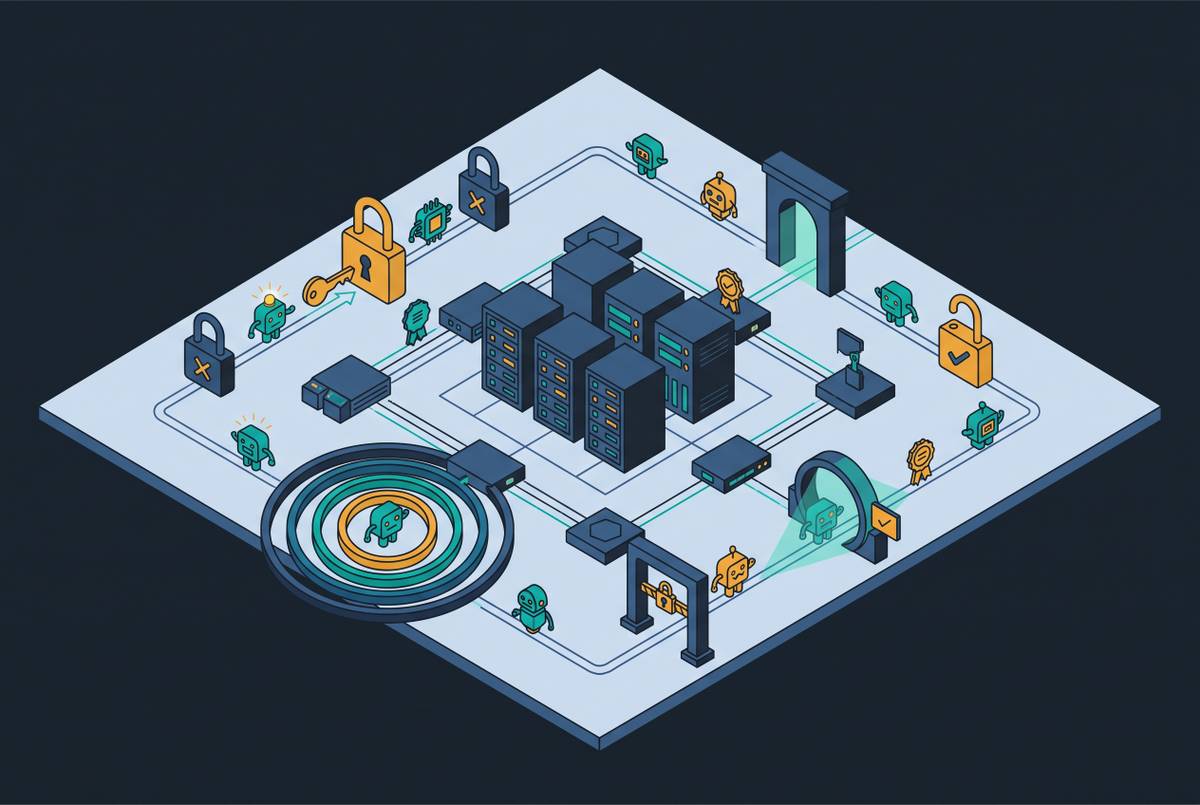
Governed AI, in practice, looks like a few specific things holding together. Every inference or recommendation traces back to the agent version that produced it, the input context it was given, and the decision logic it ran. Smart contracts enforce business rules and policy constraints, so autonomous actions stay inside predefined operational intent rather than improvising. AI agents run inside secure, auditable sandboxes, with cryptographic signing of inputs and outputs producing a record that can actually be verified after the fact, not just asserted.
Skip that governance layer, and what shows up instead is shadow automation, AI acting on portal-initiated requests outside any permission structure or audit trail. That is a liability, not an efficiency gain, and the risk is sharpest in provisioning and activation, where a mistake has direct, immediate service impact on a paying customer. KPMG research puts AI adoption in telecom contact operations at 60% today, projected to reach 90% by 2027. The direction of travel is not in question. Whether that adoption builds operational trust or operational risk depends entirely on the governance wrapped around it.
A handful of vendors are building specifically toward that governance requirement. Blue Planet, from Ciena, offers a secure LLM gateway with access control, observability, and explainability built in, so every agentic process stays transparent and auditable rather than opaque. ServiceNow's AI Control Tower gives operators one place to register every agent, set and enforce policy, monitor what's executing, and produce audit evidence on demand, effectively turning an agent policy document into something enforced and auditable, which matters directly for BSS transformations that have to answer to regulatory frameworks like the EU AI Act. Amdocs aOS builds compliance, observability, and governance guardrails directly into the platform for mission-critical telecom operations, and Gartner has named it the company to beat in the CSP BSS AI race.
None of this is a constraint bolted on to slow AI down. Holding AI to the same APIs, audit logs, and permission structures as a human operator is what makes it safe to let AI execute portal-initiated actions autonomously in the first place.
What service providers building or evaluating portals should require from the underlying platform
One question sits underneath everything else: does the platform beneath the portal share a single data model across qualification, design, provisioning, and activation, or is it synchronizing across separate systems and hoping the sync jobs never lag? Every other requirement follows from how that question gets answered.
From the unified data model requirement, a few criteria follow directly. Qualification data has to reflect current network state, not a batch-updated snapshot from some point earlier in the week. Every status shown on the portal, from order to activation, has to trace back to the originating order record rather than getting inferred from whatever downstream event happened to fire. And the portal should be querying the same APIs internal operators use, not a separate read-only reporting layer that always lags a step behind what's actually happening on the network.
From the governance requirement, a parallel set of criteria follows. AI-initiated actions triggered by portal requests need to run inside the same permission structures and audit trails as a human operator's actions, full stop. Every automated step, whether it's a qualification check, a design trigger, or a provisioning instruction, needs enough logged context that someone can reconstruct exactly what happened and why, after the fact. And there needs to be a clear line drawn between what the AI handles on its own, what gets flagged for a human to review, and how that boundary actually gets enforced in practice, not just documented in a policy binder somewhere.
Purpose-built matters here too, and it's worth being specific about why. FTTH, dedicated internet, and Carrier Ethernet each have their own distinct provisioning workflows. Force a generic network management platform to handle all three, and it produces the same data consistency failures the legacy OSS it was meant to replace already had, just wearing a newer interface.
Appledore Research projects the global agentic AI market in telecom growing from $92 million in 2025 to $6.2 billion by 2030, and that trajectory says something about where the advantage is going to accumulate. A portal built on a unified, governed, AI-native OSS gets more capable with every iteration, because each new capability compounds on a foundation that already works. A portal built on fragmented systems just gets harder to maintain, year over year, no matter how much gets spent on the interface sitting on top of it. An AI-native OSS purpose-built for service provider operations, with one data model spanning the full service delivery lifecycle and AI operating inside the same governance framework as human operators, is the platform a self-serve portal actually needs underneath it to work the way it was promised to.