OSS Mediation Layer Design for Multi-Vendor Service Provider Networks
Unified mediation layer design prevents fragmented vendor data from breaking automation.
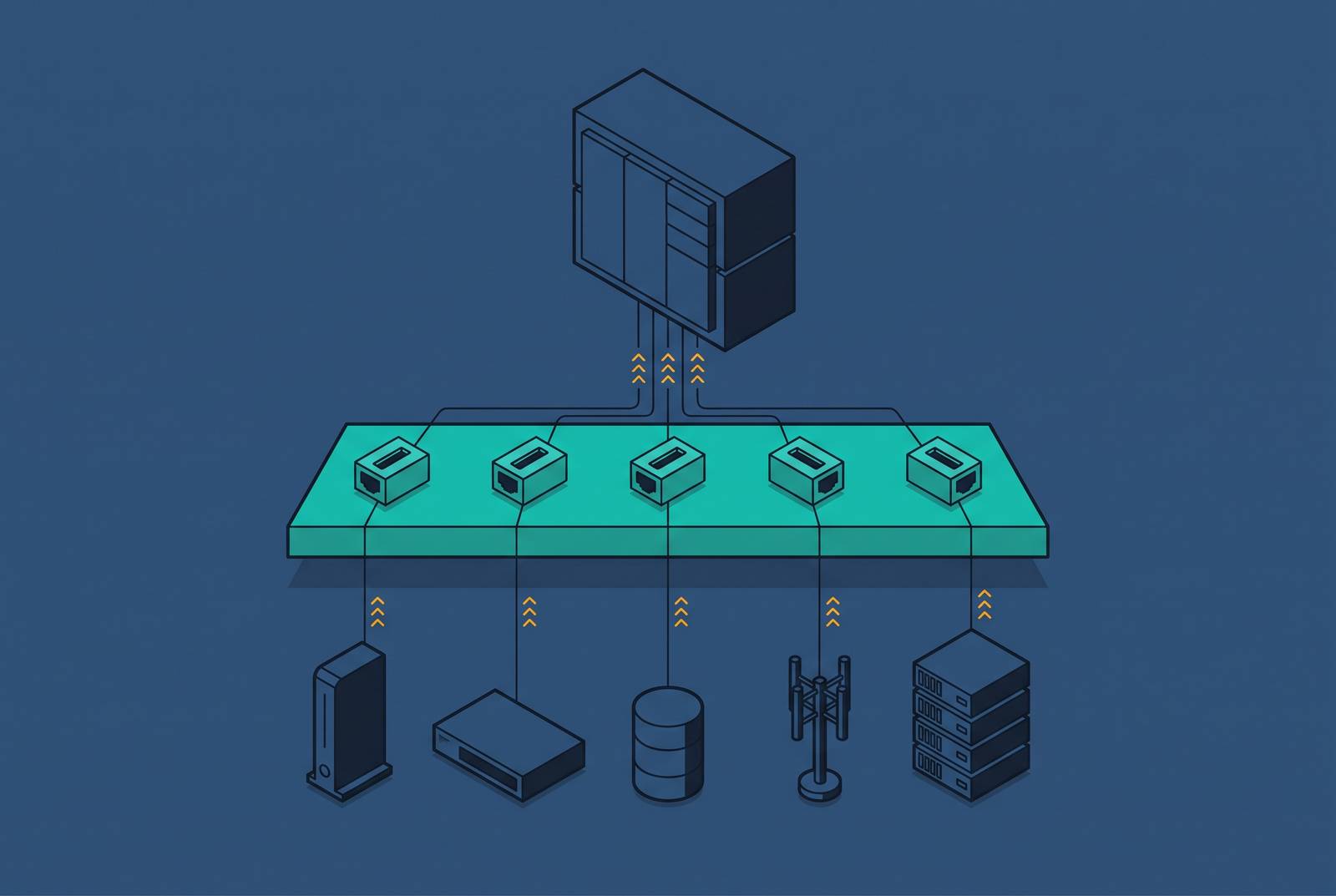
OSS mediation layer design can expose trustworthy, current service state in a multi-vendor service provider network or pass its contradictions into every downstream decision. The design must resolve three linked problems, namely mismatched update cycles, incompatible vendor meanings, and scattered normalization logic. Resolving them at the mediation layer makes reliable automation possible. Leaving them to individual applications constrains the entire OSS stack, including AI agents.
Why multi-vendor networks produce untrustworthy service state
A provisioning decision made on yesterday’s inventory state can conflict with the network state available in current telemetry. Fault correlation faces the same problem when it acts against stale topology. Neither failure requires a source platform to malfunction. Inventory, billing, CRM, and order management can each be internally consistent while remaining mutually incompatible. The defect sits between those systems, where their records become inputs to a shared operational decision.
Different update cycles explain only part of that incompatibility. A “subscriber,” “service,” or “active connection” can mean something different in each platform, so combining their records does not necessarily produce a coherent service view. Fresh data can still describe the wrong entity. When individual integrations supply their own translations, the resulting service state also depends on which integration path produced it. Service qualification, provisioning, and fault correlation then consume interpretations that may contradict one another.
Analysys Mason reports that the vast majority of operators view AI-powered automation as essential, yet fragmented OSS/BSS environments limit their ability to operationalize it at the customer experience layer. That fragmentation is an architectural constraint. A dashboard cannot make meanings or update cycles agree just by showing their outputs together. The mediation layer must resolve timing, semantics, and the authority behind each translation before those outputs become a basis for action.
The timing mismatch between real-time telemetry and batch-oriented systems
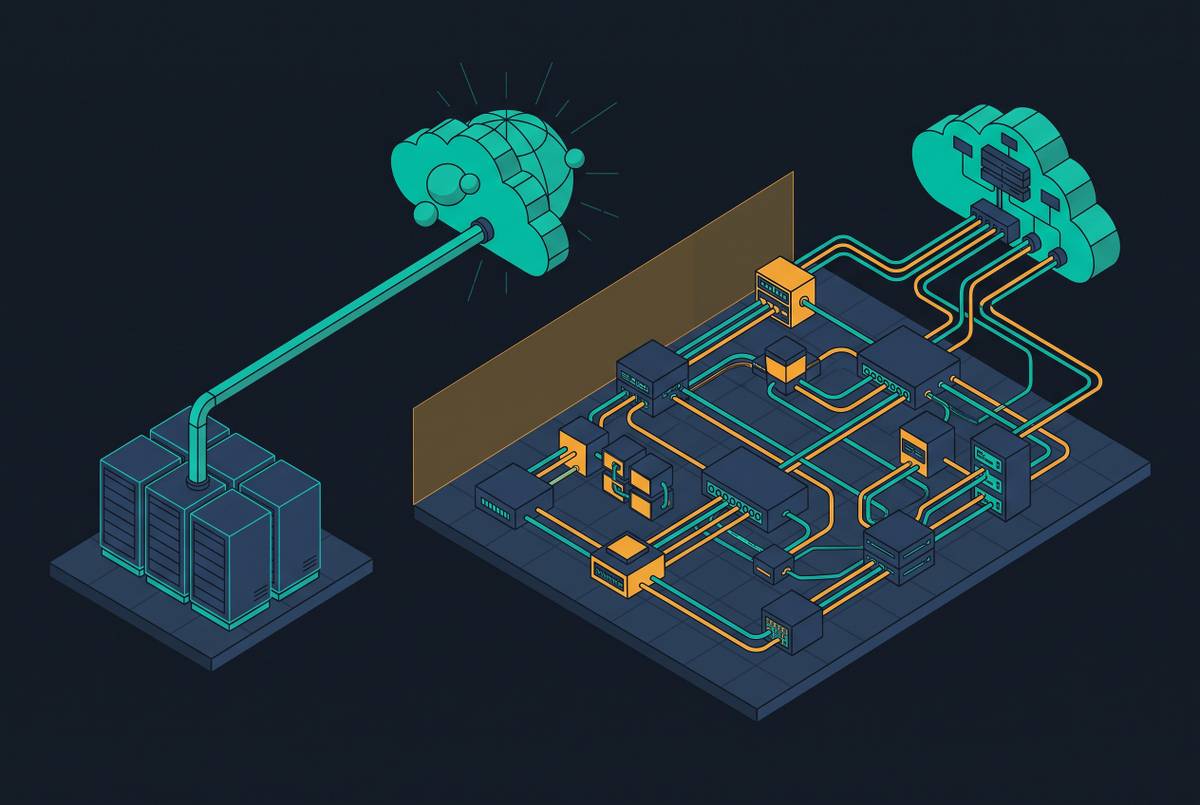
Network alarms and topology data are brought together in seconds to minutes, while billing and CRM data may arrive through nightly batch loads. The logic for service qualification and provisioning uses both streams. If there is no clear point for reconciliation, the combined view can take on the wrong timestamp without showing that anything is wrong. An operator or agent reading that view cannot tell which clock governs the decision. Every consumer can then make the same timing error even though the data it receives seems to agree.
This makes timing an architectural responsibility. The mediation layer is the point where both streams are present and where a policy can resolve their conflict. Event-driven ingestion brings in the real-time streams, while scheduled ingestion fits the batch-oriented sources. Neither ingestion method resolves their relationship by itself. Explicit timestamp governance per data class must establish how time is interpreted when those sources contribute to shared service state.
A published latency contract tells downstream systems what delay to expect when they use that state. It makes acceptable delay a property of the workload rather than an assumption hidden inside an integration. Timing governance must declare each workflow’s latency tolerance before a consumer can rely on it. Downstream logic cannot bring back a difference in timing that mediation has lost.
Timing is nevertheless the easier tension to describe. A delayed update has a recognizable relationship to the clock, even when that relationship is poorly governed. Semantic inconsistency can remain invisible in data that is entirely current. Its failure becomes apparent only when a downstream system acts on the wrong meaning.
Semantic inconsistency across vendor data models and why normalization must happen at the mediation layer
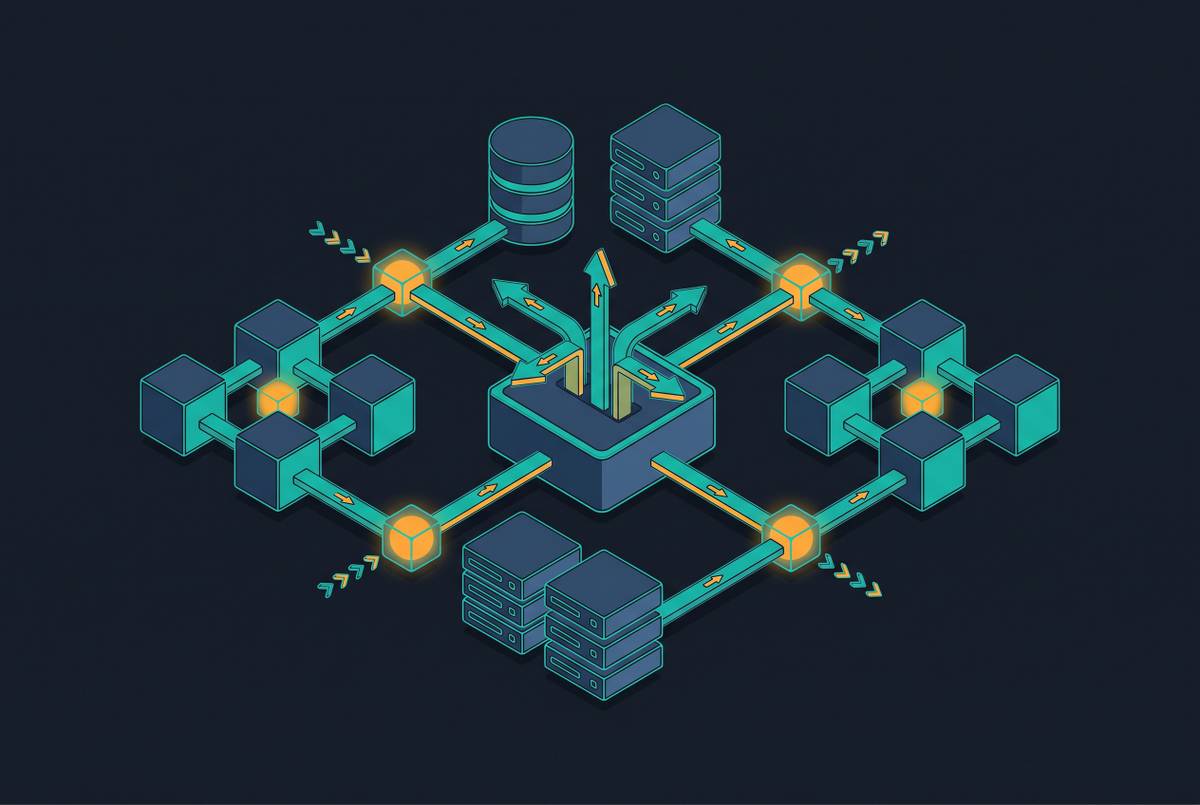
Vendor data models use different vocabularies for the same operational entities. Engineers must preserve a shared meaning as records move from those models into service-level decisions. Passing a raw payload downstream postpones that problem. Each consuming application must then decide what the vendor’s representation means, and each independent interpretation creates another opportunity for divergence. Each added vendor brings both another connection and more translation work across the network.
TM Forum’s Information Framework (SID) provides an information and data reference model with a common vocabulary independent of platform, language, or protocol. It establishes shared meanings for entities including customer, service, and resource. SID defines data models. The Open Digital Architecture (ODA) Open APIs complement that vocabulary by prescribing how the models are exposed. Together, the model and interface contract address different parts of the same interoperability problem.
TM Forum’s SID Poster v26.0 was approved in October 2026, showing that operators have an actively maintained reference. The progression from shared definitions to interface contracts reflects industry acceptance that interoperability requires more than payload transport. Implementation remains the operator’s architectural decision. A reference model cannot prevent divergence if each integration still translates records independently after ingestion.
The mediation layer must therefore own the canonical model and enforce it on ingestion. Normalization belongs before downstream interpretation. Otherwise, applications inherit responsibility for reconstructing meaning from vendor-specific representations, and their translation logic becomes progressively harder to maintain. AI agents inherit the same defect. An agent acting on conflicting definitions of one entity can make an incorrect decision whose origin is difficult to trace, directly linking model consistency to agent reliability.
What governance gaps emerge when normalization logic is scattered across siloed tools
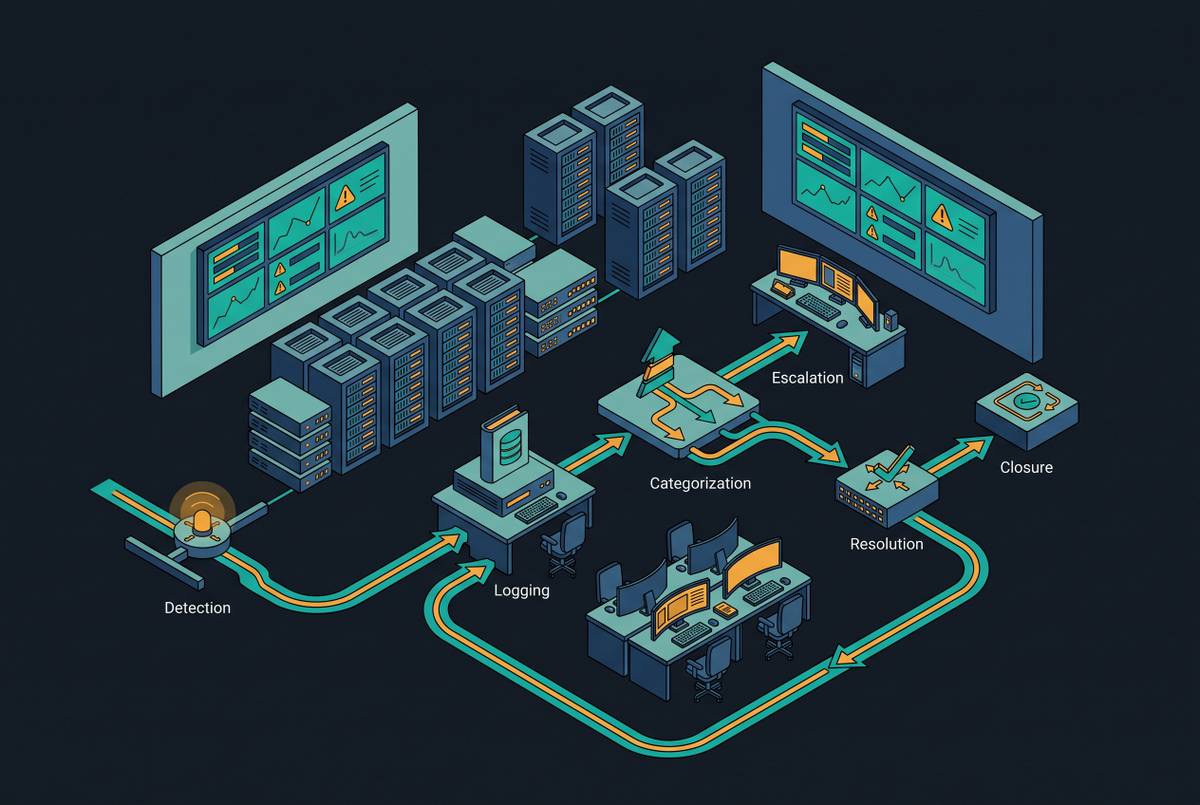
Normalization code often accumulates in point-to-point adapters, ETL scripts, and vendor-specific middleware. Each place has its own logic and version, with its own maintainer. No single system then accounts for the complete translation. When a service is mispriced, provisioning fails, or a fault is misrouted, tracing the decision back to its source requires following those separate interpretations. The difficulty is not merely finding an incorrect value, but establishing which translation produced it and under whose authority.
This turns data architecture into an accountability problem. If translation provenance is opaque, audit and error recovery lack a coherent record of how service state acquired its meaning. Automation expands that exposure. Ericsson’s agent fabric framework treats growing network complexity as a reason to embed coordinated AI capabilities inside OSS and BSS. As agents interact across those platforms, small normalization errors can cascade rapidly without clear visibility into cause and effect.
With subscriber data, who has permission to use it matters just as much. US carriers must certify CPNI compliance each year, but access controls for agents that use subscriber data need to be checked at query time. Scattered normalization logic prevents coherent per-query enforcement because the shared interpretation of data and the authority to use it are not governed together. The architecture must support the control where the data is actually used.
Putting normalization in one place gives audit trails, access policy, and error provenance a shared point. That point connects the meaning of a record to the rules governing its use. It also makes responsibility for translation explicit. A mediation layer with a canonical model and centralized normalization logic is therefore the only place where AI agent permissions and audit trails can be coherently enforced across this shared service state.
What governed AI at the mediation layer requires structurally
The architectural response is to place agents inside the same governed operating surface as human operators. Agents must use the same APIs, audit logs, and permission structures. If agent execution bypasses the controls that govern operational access, a policy may describe the intended boundary without enforcing it. The shared boundary must exist in the architecture through which actions occur.
TM Forum’s AI-native extensions to ODA, launched in 2026 as part of the Race to 2030, add a governed execution layer for AI agents within the existing architecture. The ODA Canvas provides control points, and support for Model Context Protocol links agents to ODA Components. The placement is significant. Agent governance is part of the operations framework instead of a parallel agent stack, which keeps agent execution under the platform’s operating controls.
Ericsson’s approach provides a centralized agent fabric control plane for discovery, governance, and orchestration across OSS and BSS workflows. A centralized control plane is compatible with shared governance when agents remain first-class participants within the same API surface and permission boundary. Blue Planet, a division of Ciena, sets out requirements that fit with this approach. Its principles ground AI in accurate, information-rich context, apply proven operational processes, and maintain guardrails and observability that capture agents’ actions and reasoning.
Governance does introduce a validation step into automation. The alternative, however, is revenue leakage, audit exposure, and regulatory risk introduced at machine speed. The draft-first pattern validates automated actions. AI-native therefore does not mean AI-only, because humans and agents must operate within the same transparent system. The mediation layer either provides that shared surface or leaves a gap between operational authority and automated action.
How these design principles apply to FTTH, dedicated internet, and Carrier Ethernet provisioning workflows
FTTH provisioning exposes these design choices at the handoff from installation to service activation. A completed installation can trigger device provisioning, update the subscriber record, initiate billing, and close the work order from the same execution event. That handoff depends on mediation correctness. The participating systems must agree on what the event means and how current its associated state is before it can propagate without manual reconciliation at each boundary.
In FTTH environments using PON technologies, the provisioning burden scales directly with the footprint. LF Broadband’s VOLTHA establishes a unified control and management framework for OLTs and ONUs. The canonical model can remain coherent only if mediation normalizes across vendor OLT implementations, rather than leaving each downstream workflow to interpret them separately.
Carrier Ethernet and dedicated internet workflows face the same semantic problem across multi-vendor access and aggregation layers. Those layers emit configuration and state data in vendor-specific formats, making drift between the network record and service record the default outcome without normalization. Carrier Ethernet adds a sharp timing conflict. SLA monitoring needs sub-minute telemetry, while order and billing systems may still run on batch cycles. Without explicit latency contracts per data class, SLA reporting can contradict real-time performance data.
Platforms supporting Active Ethernet, PON, and Fixed Wireless through automated workflows demonstrate that a unified model across service types is achievable when mediation enforces it on ingestion. Federation offers a related way to maintain coherence. NTT DATA’s Next Gen OSS implementation centers on federated inventories and a unified topological view, eliminating data replication while providing accurate network representation. The design produces one governed view rather than multiple reconciled copies. The same decisions that make these provisioning handoffs dependable also enable AI agents to act reliably on their service state.
Why the architectural decisions made at the mediation layer determine the ceiling of the rest of the OSS stack
Service qualification, fault correlation, autonomous provisioning, and AI decision-making all operate on the state mediation produces. Their sophistication cannot compensate for inputs whose meaning or timing is unresolved. Errors propagate beyond the integration that introduced them. Conversely, a trustworthy service view gives those functions a common basis for coordinated action, rather than requiring each to reconstruct operational truth independently.
TM Forum’s scale for autonomous network maturity goes from Level 0 through Level 5. As of 2026, most operators sit at Level 2 or below, with the largest single cohort at Level 2 and nearly half still at Level 0–1. Progress remains specific to particular domains. Validated Level 4 results have arrived in areas such as energy optimization, while fault management has approached but not reached a full 4.0. The domains that have progressed are those where the underlying data model and normalization are most mature.
Cross-domain coordination also depends on integration with TM Forum Open APIs, compatibility with O-RAN Alliance RIC, and the NWDAF defined in 3GPP Release 15 onward. Those integration points land at mediation first. Even when interfaces are compatible, the data that crosses each one still needs rules for its meaning and timing to form coherent service state. Autonomous systems therefore depend on both connectivity and the interpretation enforced at that boundary.
These decisions are not cheaply reversible later. A mediation layer without a canonical model, timing governance, or centralized normalization accumulates integration debt with every new vendor. Later automation inherits both that debt and the unreliable state it produces. Mediation design is consequently a first-order architectural decision. It sets the quality of the evidence on which the rest of the OSS stack is allowed to act.